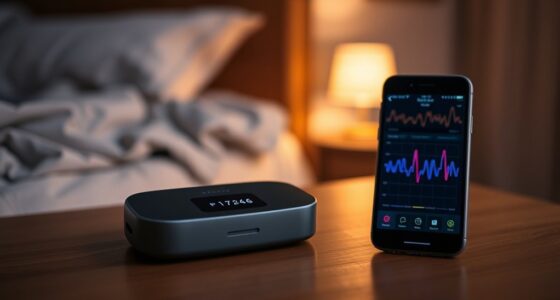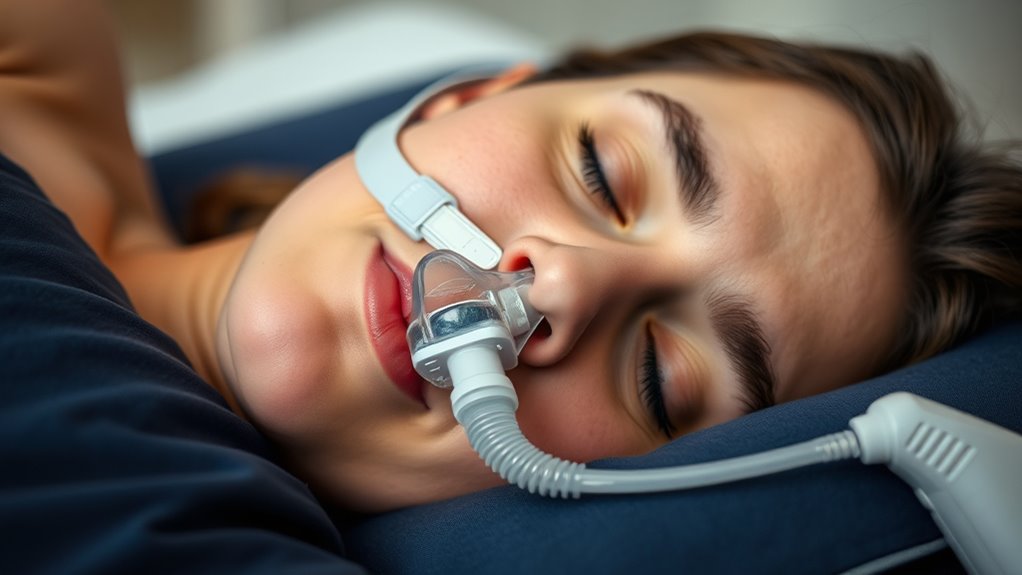

If you notice loud snoring, breathing pauses, or waking up unrefreshed despite enough sleep, you might have sleep apnea. This condition causes your breathing to repeatedly stop and start, leading to daytime fatigue and health risks like high blood pressure. Recognizing early signs—like dry mouth or headaches—helps you seek diagnosis and treatment options such as lifestyle changes or a CPAP machine. Stay with us to discover how proper management can improve your nights and days.
Key Takeaways
- Recognize sleep apnea signs such as irregular snoring, breathing pauses, and waking unrefreshed.
- Monitor daytime fatigue and sleep disruptions as potential indicators of sleep apnea.
- Seek medical evaluation and sleep studies if symptoms persist despite good sleep habits.
- Lifestyle changes like weight management and positional therapy can help reduce symptoms.
- Use medical devices such as CPAP and follow professional guidance for effective treatment.
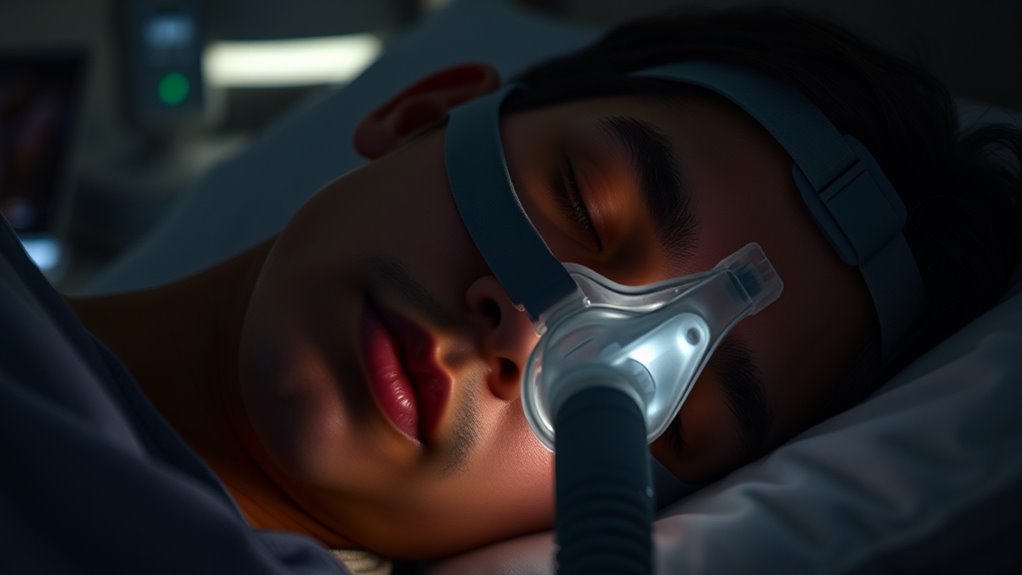
Have you ever woken up feeling tired despite a full night’s sleep? If so, you might be unaware that your sleep quality could be compromised by sleep apnea. One of the most common signs is irregular snoring patterns. You may notice that your snoring isn’t just loud but also inconsistent—sometimes it’s loud and forceful, other times it’s a soft gasp or pause. These interruptions happen because your airway temporarily collapses or becomes blocked during sleep, causing you to stop breathing for a few seconds. Over time, these breathing disruptions fragment your sleep cycle, preventing you from reaching the restorative deep sleep stages. As a result, you wake up feeling unrefreshed, even after what should have been a sufficient amount of rest.
Your daytime fatigue is a key indicator that something’s wrong. If you find yourself feeling drowsy during meetings, struggling to stay awake while reading or watching TV, or feeling exhausted even after a full night in bed, sleep apnea could be the culprit. This constant lack of quality sleep means your body isn’t getting enough oxygen, which affects your overall energy levels and mental clarity. It’s common to dismiss these symptoms as mere tiredness or stress, but persistent daytime fatigue paired with noticeable snoring patterns shouldn’t be ignored. It’s your body’s way of signaling that your sleep is being disrupted, and untreated sleep apnea can lead to more serious health issues like high blood pressure, heart disease, and stroke.
Recognizing these signs early can make a significant difference. Keep track of your snoring patterns—note if your partner reports loud, frequent snoring or if you experience pauses in breathing during sleep. Pay attention to your own body’s signals, especially if you wake up with headaches, dry mouth, or a sore throat. If daytime fatigue persists despite adequate sleep hours, it’s time to seek medical advice. A sleep study might be recommended to diagnose sleep apnea accurately. Treatment options often include lifestyle changes such as weight loss, positional therapy, or the use of a continuous positive airway pressure (CPAP) device. Addressing the issue not only improves your sleep quality but also enhances your overall health and daytime alertness. Don’t ignore these signs—getting proper treatment can truly transform your nights and your days.

REMstar Plus System,Portable Auto Machine for Sleep Apnea,Travel Machine with Full Accessories&Travel Bag,Home and Travel Use
[Professional Device for Home & Travel] Specially designed for adults with OSA/OHS-Full accessory kit included– no extras needed….
As an affiliate, we earn on qualifying purchases.
As an affiliate, we earn on qualifying purchases.
Frequently Asked Questions
Can Children Develop Sleep Apnea?
Yes, children can develop sleep apnea. You should watch for pediatric risk factors like enlarged tonsils, obesity, or craniofacial abnormalities. Childhood symptoms include loud snoring, restless sleep, and daytime sleepiness. If you notice these signs, it’s important to consult a healthcare professional. Early detection and treatment can improve your child’s sleep quality and overall health, reducing the risk of future complications related to sleep apnea.
Are There Natural Remedies for Sleep Apnea?
Yes, there are natural remedies for sleep apnea. You can try herbal remedies like valerian root or passionflower, which may promote relaxation and better sleep. Also, lifestyle changes such as losing weight, sleeping on your side, and avoiding alcohol or sedatives can markedly reduce symptoms. These approaches won’t replace medical treatment but can complement it, helping improve your overall sleep quality and breathing during the night.
How Does Sleep Apnea Affect Mental Health?
Sleep apnea can dramatically impact your mental health, turning your mind into a battlefield of fatigue and confusion. It disrupts your sleep quality, causing mood swings, anxiety, and even depression. When your restful nights are stolen, your mental clarity and emotional stability suffer immensely. You might feel like you’re battling an invisible force each day, making it essential to recognize and treat sleep apnea to restore your mental well-being and overall health.
Is Sleep Apnea Linked to Heart Disease?
Yes, sleep apnea is linked to heart disease. When you have sleep apnea, your breathing repeatedly stops during sleep, which can strain your heart and increase your cardiovascular risk. This disruption causes blood pressure spikes and reduces oxygen levels, putting extra stress on your heart. Over time, these effects can lead to serious issues like hypertension, arrhythmias, or even heart failure, making it essential to address sleep apnea for your heart health.
What Are the Latest Advancements in Sleep Apnea Treatment?
Imagine opening new doors in sleep apnea treatment; that’s what advanced therapies and emerging devices offer. You can now explore options like hypoglossal nerve stimulation, which acts like an internal guardian keeping your airway open, and personalized CPAP machines that adapt to your breathing patterns. These innovations are transforming your options, making relief more effective and comfortable, so you can finally breathe easy through the night.

Somnofit-S Anti-Snore Mouth Guard by SnoreLessNow | Made in Switzerland | FDA Cleared | Most Comfortable Anti Snoring Mouthpiece | Sleep Tight Mouth Guard | Adjustable Snoring Solution for Men & Women
FDA-CLEARED ANTI-SNORING SOLUTION: The Somnofit-S is a top-rated anti-snoring device, clinically proven to reduce snoring and improve sleep…
As an affiliate, we earn on qualifying purchases.
As an affiliate, we earn on qualifying purchases.
Conclusion
By recognizing the signs of sleep apnea and seeking proper treatment, you take control of your health before it spirals out of control. Don’t wait for the storm to pass; address the issue now so it doesn’t come back to bite you later. With awareness and action, you can breathe easier and enjoy better rest. Remember, prevention is better than cure—don’t let sleep apnea catch you off guard when it’s easier to tackle early on.

Derila Ergo Cervical Neck Pillow for Sleeping Pillow Contour Memory Foam Pillows for Back, Side Sleeper Pillows 21.25 x 14.17 x 4.72 inches
Cervical Neck Pillow for Sleeping – The Derila Ergo Pillow is a cervical pillow for sleeping.
As an affiliate, we earn on qualifying purchases.
As an affiliate, we earn on qualifying purchases.

EMAY Sleep Oxygen Monitor with Built-in Recording Capability | Track Continuous Blood Oxygen Levels & Pulse Rate Overnight | Provides Sleep Report & Raw Data
With a 40 hours' built-in data memory, the EMAY Oxygen Monitor allows you to record O2 & heart…
As an affiliate, we earn on qualifying purchases.
As an affiliate, we earn on qualifying purchases.