

Understanding sleep stages helps you see how your body refreshes each night. Your sleep cycle includes REM and non-REM phases, each with unique roles. Non-REM sleep relaxes your muscles and restores your body, while REM sleep sparks brain activity, dreaming, and memory processing. These stages repeat every 90 minutes, with REM periods lengthening as the night progresses. To learn how these phases work together to keep you healthy, keep exploring the details behind sleep’s rhythm.
Key Takeaways
- Sleep cycles last about 90-110 minutes, alternating between REM and non-REM stages.
- Non-REM sleep involves relaxation, slow brain activity, and deep restorative phases like slow-wave sleep.
- REM sleep features increased brain activity, rapid eye movements, and is when most dreaming occurs.
- The proportion of REM increases throughout the night, especially in the later sleep cycles.
- Proper balance of REM and non-REM stages is essential for physical health, mental well-being, and dream recall.
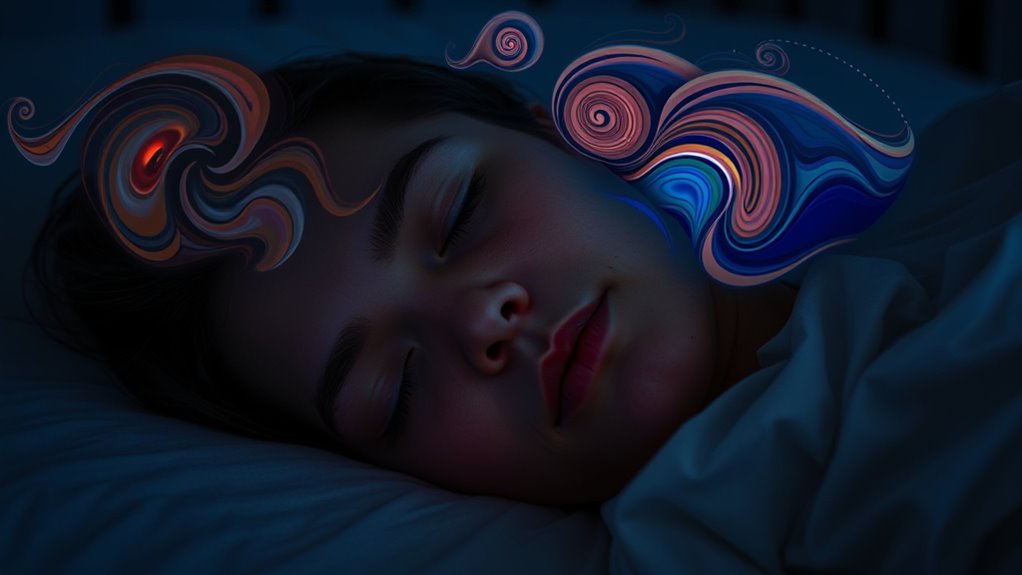
Have you ever wondered what happens in your body while you sleep? Understanding the different sleep stages can help you grasp how your body and mind recover during the night. When you sleep, your brain shifts through a series of cycles, each lasting about 90 to 110 minutes, known as sleep cycle duration. During these cycles, your body transitions between various stages, primarily REM and non-REM sleep. Recognizing these stages can also shed light on dream recall, which varies depending on where you are in your sleep cycle.
In the non-REM stages, your body relaxes, and your brain activity slows down. This part of your sleep is divided into lighter stages, where you can be easily awakened, and deeper stages, where waking becomes more difficult. Deep non-REM sleep, often called slow-wave sleep, is essential for physical restoration, immune function, and energy replenishment. During this phase, your muscles relax completely, your breathing slows, and your heart rate drops. This stage typically dominates the first half of your sleep cycle.
As your sleep progresses, you enter REM sleep, which usually begins about 90 minutes after falling asleep. During REM, your brain becomes highly active, almost like when you’re awake, and your eyes dart rapidly beneath your eyelids. This stage is where most dreaming occurs, and it’s closely linked to your ability to recall dreams. If you’re curious about your dream recall, you’ll find that waking during or immediately after REM sleep increases your chances of remembering what you dreamed about. The duration of REM sleep also lengthens with each cycle, meaning your last REM phase before waking can be quite lengthy, sometimes up to an hour in total sleep.
Throughout the night, your sleep cycles repeat several times, with non-REM stages gradually giving way to longer REM periods. This ebb and flow are vital for both physical and mental health. The balance and timing of these stages influence how rested you feel and how well you remember your dreams. If your sleep cycle is disrupted or shortened, you might notice decreased dream recall and less restorative sleep overall. To optimize your sleep quality, aim for consistent bedtimes that allow your natural sleep patterns to unfold fully. Understanding these stages helps you appreciate the importance of a full, uninterrupted night’s sleep for your well-being.
Additionally, understanding the sleep cycle duration can help you better plan your sleep schedule to maximize restorative sleep and dream recall.

Zeacool Fitness Tracker with 24/7 Heart Rate, Blood Oxygen Blood Pressure Sleep Monitor, Activity Trackers 5 ATM Waterproof,Step Calorie Counter Pedometer Health Smart Watch for Women Men (Black)
24/7 Heart Rate Monitor :This blood pressure watch supports real-time dynamic heart rate, blood oxygen, blood pressure ,Sleep…
As an affiliate, we earn on qualifying purchases.
As an affiliate, we earn on qualifying purchases.
Frequently Asked Questions
How Do Sleep Stages Affect Memory Consolidation?
Sleep stages play a vital role in your memory processing and cognitive retention. During REM sleep, your brain consolidates emotional and procedural memories, boosting learning. Non-REM sleep, especially deep stages, helps stabilize factual information and strengthens neural connections. By cycling through these stages, you enhance your ability to retain and recall information, making restorative sleep essential for effective memory processing and maintaining mental sharpness.
Can Sleep Stages Be Influenced by Diet or Exercise?
Sure, your sleep cycle can be influenced by diet impact and exercise. Ironically, eating heavy or spicy foods before bed often disrupts your sleep, lengthening wakefulness during the cycle. Regular exercise, however, can promote better sleep stages, especially REM. So, while your diet and workout routine might seem unrelated, they play a surprisingly vital role in shaping your sleep cycle and overall rest quality.
Do Sleep Stages Differ Between Adults and Children?
You’ll notice sleep pattern differences between adults and children because developmental changes impact how their sleep cycles unfold. Children spend more time in REM sleep, which supports brain development, and their Non-REM stages are longer and more intense. As you grow, these stages shift, with adults experiencing less REM and more stable sleep. Understanding these differences helps you appreciate how sleep evolves throughout your life and how it affects overall health.
How Do Sleep Disorders Impact REM and Non-Rem Sleep?
When sleep takes a gentle, uneven dance due to disorders like sleep apnea or restless legs, it can quiet your REM and non-REM stages. Sleep apnea causes pauses in breathing, disrupting deep rest, while restless legs stir your body, preventing peaceful shifts. These interruptions often lead to fragmented sleep, leaving you tired and unrested, as both stages are essential for restoration and well-being.
Is It Possible to Control or Modify Sleep Stages Consciously?
Yes, you can influence your sleep stages through techniques like lucid dreaming and sleep stage manipulation. By practicing methods such as reality checks or setting intentions before sleep, you might increase your chances of entering REM sleep consciously. While full control is challenging, these techniques help you become more aware during sleep, potentially allowing you to modify or extend specific sleep stages and experience more vivid dreams or restful sleep.

Garmin Index Sleep Monitor, Smart Sleep Band with Advanced Sleep Tracking and Recovery Metrics, S-M
Worn on the upper arm, this lightweight and breathable smart sleep band is available in two sizes for…
As an affiliate, we earn on qualifying purchases.
As an affiliate, we earn on qualifying purchases.
Conclusion
Now that you know about REM and non-REM sleep, picture yourself drifting through a peaceful night. As you sink into deep, restorative rest, your body repairs and recharges, like a gentle tide washing over the shoreline. When REM sleep arrives, it’s as if your mind sparks to life, painting vivid dreams across your inner canvas. Understanding these stages helps you embrace your sleep, turning every night into a journey of renewal and discovery.
Calming Ocean Waves – Nature Sounds for Relaxation, Meditation and Sleep – Nature's Perfect White Noise
60 minutes of calming ocean waves. Relax and drift off to sleep to the rhythm of real ocean…
As an affiliate, we earn on qualifying purchases.
As an affiliate, we earn on qualifying purchases.

Dingbats* Dream Journal – Guided Dream Diary for Recording and Reflecting on Dreams, Symbols & Insights – Thick Paper Hardcover Thread-Bound Journal Notebook with Elastic Closure, Pen Loop & Pocket
CAPTURE YOUR DREAMS BEFORE THEY FADE: Record vivid details, emotions, and symbols the moment you wake. This guided…
As an affiliate, we earn on qualifying purchases.
As an affiliate, we earn on qualifying purchases.