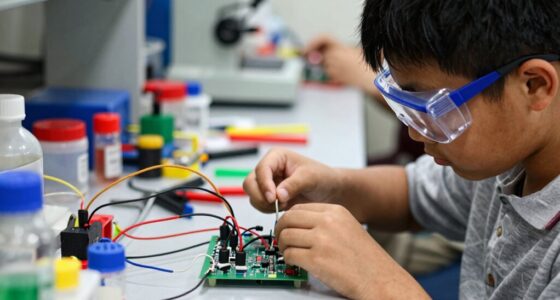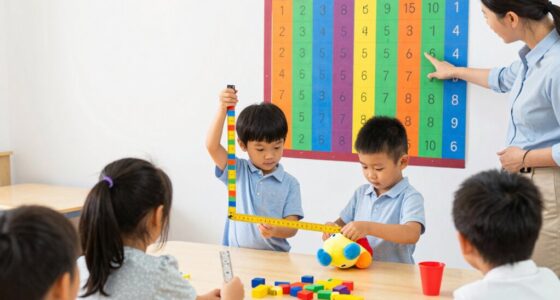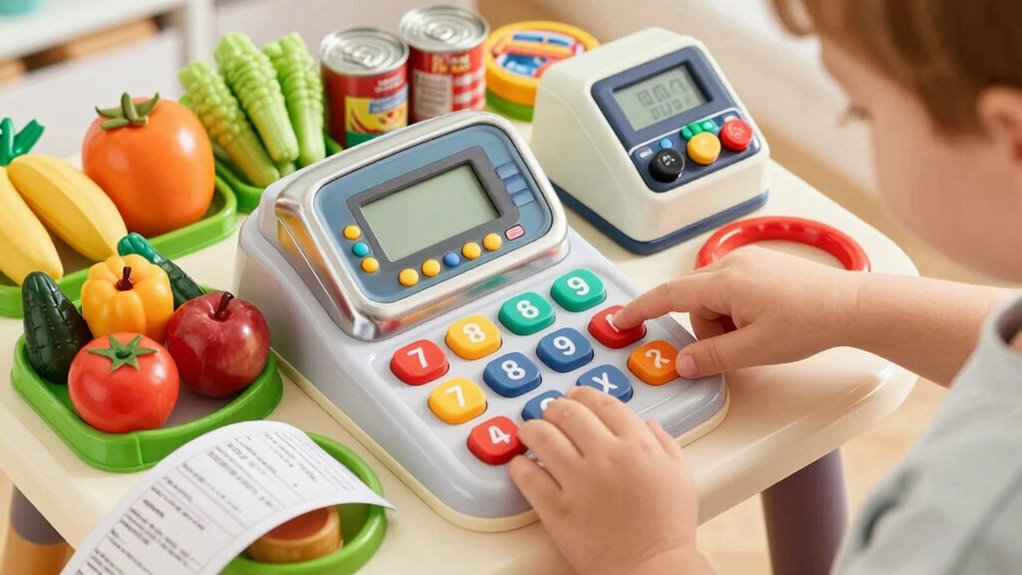

Cash register play is more educational than it looks because it helps you teach kids about money management, counting, and responsible spending through fun, realistic scenarios. It also encourages social skills like sharing, taking turns, and communicating, while boosting problem-solving and critical thinking. Plus, it develops fine motor skills with hands-on interactions and introduces technology concepts. If you keep exploring, you’ll discover how this simple activity nurtures multiple skills that last a lifetime.
Open a free Amazon Business account
Business pricing, bulk buying and tax-exempt orders.
As an affiliate, we earn on qualifying purchases.
Key Takeaways
- Promotes financial literacy by teaching money handling, saving, spending, and real-world transactions.
- Enhances social skills through communication, negotiation, and respectful interactions during role-play.
- Develops problem-solving and critical thinking by calculating change and totals in practical scenarios.
- Improves fine motor skills and sensory development through handling money, pressing buttons, and organizing items.
- Integrates multiple learning areas, fostering foundational skills for academic success and technological familiarity.
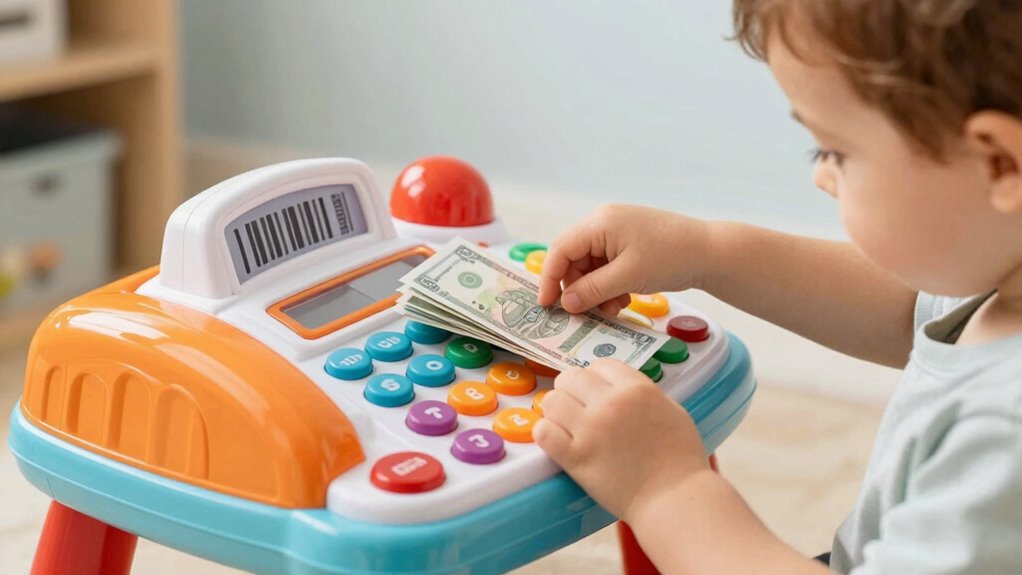
Have you ever wondered how a simple cash register toy can boost your child’s learning? It might seem like just a playful way to imitate checkout counters, but in reality, it’s a powerful tool for developing essential skills. When your child plays with a cash register, they’re not only having fun—they’re also laying the groundwork for financial literacy. They learn to recognize the value of money, practice basic counting, and understand the concept of transactions. These early experiences help demystify money management, making future financial decisions less intimidating. As they pretend to scan items and give change, they’re grasping fundamental ideas about saving, spending, and responsible handling of resources.
Beyond financial literacy, cash register play nurtures important social skills. When your child interacts with you or other children during play, they practice communication, negotiation, and cooperation. For example, they learn to take turns pressing buttons, giving change, or announcing prices, which encourages patience and respectful social interactions. Playing store or checkout scenarios also teach empathy; your child begins to understand the needs and wants of others as they pretend to serve customers. These role-playing opportunities foster confidence in social settings, helping your child become more comfortable expressing themselves and engaging with peers. Developing empathy through play is also linked to understanding emotional intelligence, which is crucial for healthy social relationships. Incorporating diverse play scenarios can further enhance their understanding of social dynamics and cooperation.
Playing store fosters social skills, empathy, patience, and confidence through role-playing and interactive scenarios.
Moreover, playing with a cash register encourages problem-solving and critical thinking. Your child might encounter situations where they need to figure out how much change to give or how to total a bill. These challenges push them to think logically and apply basic math skills in a practical context. They learn that mistakes are part of learning, and they develop patience and perseverance as they work through problems. This type of play makes abstract concepts more tangible, reinforcing lessons in a way that feels natural and engaging. Additionally, understanding contrast ratio can help children appreciate the importance of clarity and detail, even in their imaginative scenarios. Exploring different features of a cash register, such as digital displays and pretend credit card transactions, can introduce them to technology integration, which is increasingly relevant in today’s digital economy. These features also help children become familiar with digital interfaces, boosting their comfort with technology from an early age.
Furthermore, cash register toys often incorporate other developmental benefits, like fine motor skills. Pressing buttons, sliding the scanner, or handing over play money enhances dexterity and hand-eye coordination. The act of organizing coins or bills also promotes orderliness and attention to detail. The incorporation of realistic features, such as pretend credit card swipes or digital displays, can further enhance these skills. All these skills contribute to a well-rounded foundation for academic success and everyday independence. As children explore these features, they also develop visual discrimination, which supports their overall sensory development and ability to differentiate details.
In essence, your child’s playtime with a cash register is much more than simple entertainment. It’s an integrated learning experience that fosters financial literacy, social skills, problem-solving, and fine motor development. By engaging in this imaginative play, you’re helping them build the skills they’ll carry into adulthood—making this humble toy a surprisingly powerful educational tool.
As an affiliate, we earn on qualifying purchases.
Frequently Asked Questions
How Does Cash Register Play Improve Real-World Math Skills?
Cash register play boosts your real-world math skills by helping you practice money management and problem-solving skills. As you handle transactions, count change, and organize sales, you learn to quickly add and subtract amounts, strengthening your numerical fluency. This hands-on experience encourages critical thinking and quick decision-making, essential for everyday financial tasks. Overall, it makes math fun and practical, preparing you for real-life situations involving money.
What Age Is Best Suited for Cash Register Toys?
You should choose cash register toys for children aged 3 to 8, as they’re safe and engaging for that age group. When selecting, consider toy safety features like non-toxic materials and sturdy design. Do a brand comparison to find reputable options that meet safety standards. These toys help kids develop math and social skills while having fun, making them perfect for preschoolers and early elementary learners.
Can Cash Register Play Help With Social Skills Development?
Yes, cash register play can considerably boost your child’s social skills through role-playing scenarios. As they interact with others, they practice communication skills like sharing, negotiating, and taking turns. This type of play encourages your child to understand different perspectives and develop empathy, enhancing their ability to navigate social situations confidently. Plus, it makes learning social skills fun and engaging, laying a strong foundation for future interactions.
Are Digital or Physical Cash Registers More Educational?
Digital cash registers often offer interactive features that enhance learning through digital integration, making math and money management fun and engaging. Physical cash registers, on the other hand, provide better physical durability and tactile experience, helping you develop fine motor skills. Both types are educational, but choosing depends on whether you prioritize technological interaction or durability and hands-on play. Combining both can give your child a well-rounded learning experience.
How Can Parents Enhance Learning During Cash Register Play?
You can enhance learning during cash register play by introducing role-playing scenarios that mimic real-life shopping experiences. Encourage your child to create creative storytelling about their store, customers, and transactions. Ask questions to boost their reasoning skills and expand their vocabulary. Providing real or pretend money helps teach math concepts like addition and subtraction. This interactive approach makes learning fun and reinforces essential skills naturally through imaginative play.
educational cash register for children
As an affiliate, we earn on qualifying purchases.
As an affiliate, we earn on qualifying purchases.
Conclusion
So, next time you see a child playing with a cash register, remember it’s more than just fun. It’s about learning to count, about understanding money, about developing social skills. It’s about imagining, about role-playing, about making sense of the world. It’s more than a game—it’s a foundation for future skills. Embrace the play, encourage the learning, and watch their confidence grow, their curiosity flourish, and their knowledge expand.
As an affiliate, we earn on qualifying purchases.
As an affiliate, we earn on qualifying purchases.
NFL season / tailgating Picks
team gear
As an affiliate, we earn on qualifying purchases.