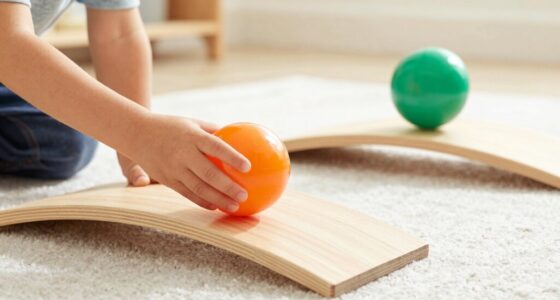

You should stop worrying about mess and mistakes during STEM play because they are essential for your child’s growth. Kids learn best through trial and error, exploring freely, and making accidents. Messes indicate deep engagement and creativity, not unproductiveness. Safety is important, but overprotecting can limit these valuable experiences. Embrace the chaos and discover how allowing mistakes fosters confidence, problem-solving, and independence. If you want to understand how to support their natural curiosity, keep exploring these ideas.
Key Takeaways
- Messy play indicates active engagement and essential learning, not unproductiveness or disorder.
- Mistakes during trial and error foster resilience, problem-solving, and a growth mindset.
- Open-ended activities encourage creativity and independent thinking, even if they seem chaotic initially.
- Safety precautions allow exploration without eliminating all risks, which supports confidence and skill-building.
- Overprotecting children from mistakes can limit their development and their ability to test limits responsibly.

Many parents worry that their children’s early STEM play might be too messy, disorganized, or even unproductive. It’s natural to feel this way, especially when you consider the potential chaos of kids experimenting with building blocks, circuits, or robotics. However, these concerns often stem from creative misconceptions about what STEM play should look like. You might think that every activity needs to be perfectly planned or that messes indicate a lack of learning. The truth is, messy play is a crucial part of exploration and understanding. Children learn through trial and error, and a little chaos is a sign they’re engaging deeply with the process. Incorporating free floating elements into their play can encourage a more relaxed and inventive environment, fostering creativity and independent thinking. Additionally, embracing open-ended resources allows children to extend their play and discovery beyond structured tasks, enriching their learning experience. Recognizing the importance of child-led exploration can help parents feel more comfortable with the natural messiness of STEM activities. Understanding that creative exploration is a vital part of development can shift perceptions about mess and order in play. Safety concerns are another common worry that can sometimes overshadow the benefits of STEM activities. You might hesitate to let your child work with small parts, sharp tools, or electronic components, fearing injuries or accidents. While safety is important, it shouldn’t prevent your child from engaging in meaningful STEM experiences. Many activities can be adapted with simple precautions—supervision, age-appropriate tools, and clear instructions are often enough to keep safety in check. Remember, avoiding all risks can hinder your child’s development; they need opportunities to test limits and learn how to handle tools responsibly. Instead of overprotecting, focus on teaching safety rules and encouraging cautious experimentation. This helps foster independence and confidence in their skills. Recognizing that learning through trial and error is essential for developing resilience and problem-solving abilities can help you strike a balance between safety and exploration.
As an affiliate, we earn on qualifying purchases.
Frequently Asked Questions
How Can I Encourage My Child’s Interest in STEM Without Pressure?
You can encourage your child’s interest in STEM by providing fun, educational toys that spark curiosity, without adding pressure. Let them explore through creative experiments at their own pace, emphasizing discovery over perfection. Celebrate their efforts and imagination, which naturally nurtures enthusiasm. Avoid pushing for immediate results, and instead, offer support and encouragement. This approach helps your child develop a genuine love for STEM, making learning enjoyable and stress-free.
Are There Age-Appropriate STEM Activities for All Children?
Yes, there are age-appropriate STEM activities for all children. For younger kids, choose toys that emphasize toy safety and simple concepts, like building blocks or beginner science kits. As they grow, introduce more complex projects that encourage problem-solving. Remember to balance screen time with hands-on activities to foster curiosity. Ensuring activities are suitable for their age helps maintain engagement without overwhelming them, making STEM learning fun and safe.
What Common Misconceptions Exist About STEM Play and Development?
In the age of chariots and steam engines, many misconceptions about stem play and development persist. You might think stem play solely boosts academic skills, but it also nurtures essential developmental milestones like problem-solving, creativity, and fine motor skills. Remember, every child’s pace varies. Don’t worry if they don’t master everything immediately—stem play’s goal is fostering curiosity and growth, not ticking off a checklist.
How Do I Balance STEM Play With Other Types of Learning?
To balance STEM play with other types of learning, you should prioritize balancing play and learning integration. Incorporate a mix of STEM activities, arts, reading, and outdoor play into your child’s routine. Encourage diverse experiences to foster well-rounded development. Set aside specific times for STEM exploration and also for creative arts or social activities. This approach guarantees your child benefits from a well-rounded education without feeling overwhelmed or missing out.
What Signs Indicate My Child’s STEM Interests Are Genuine?
You can tell your child’s stem interest is genuine if they keenly explore related activities, ask lots of questions, and stay engaged over time. Authenticity indicators include their willingness to experiment without prompt and their desire to solve problems independently. If they consistently choose stem-related play and show enthusiasm even outside structured activities, it’s a clear sign their stem interest is real and deeply rooted, not just a passing phase.
As an affiliate, we earn on qualifying purchases.
Conclusion
Remember, STEM play is all about exploration and fun, not perfection. You might worry about your child making mistakes or not mastering skills immediately, but that’s part of learning. Don’t stress over every slip-up; instead, celebrate their curiosity and resilience. Mistakes are simply stepping stones to understanding. So, relax and enjoy the process—your support and encouragement matter far more than flawless outcomes. After all, fostering a love for STEM is what truly counts.
As an affiliate, we earn on qualifying purchases.
As an affiliate, we earn on qualifying purchases.