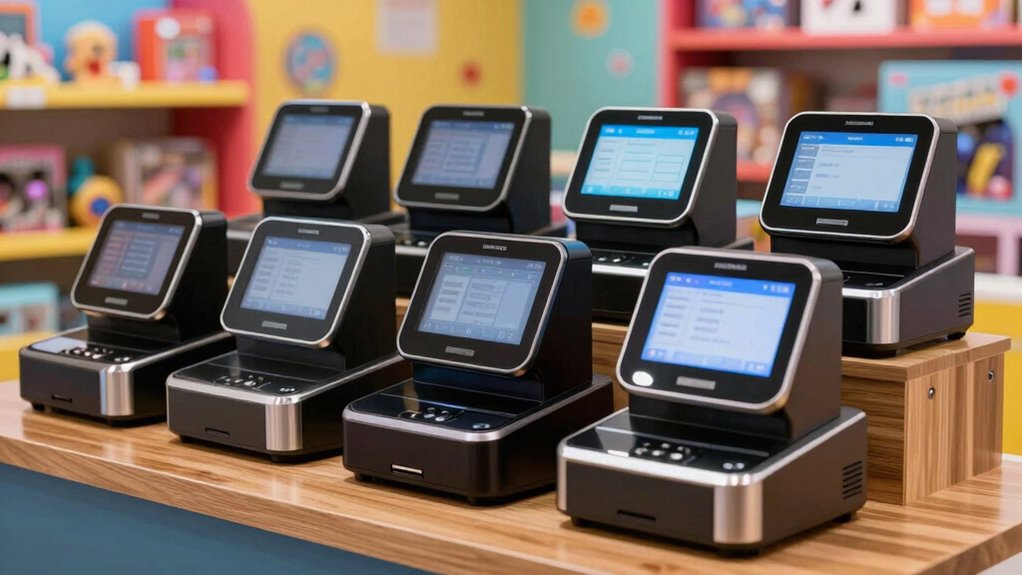

For a premium play cash register that balances pretend-shop fun with useful learning features, I’d start with the Learning Resources Pretend & Play Teaching Cash Register. The Lakeshore Real-Working Cash Register stands out for buyers who prioritize a more realistic checkout experience, while the Dr. STEM Toys Talking Cash Register offers extra variety through multiple languages and banking-themed play. The main tradeoff is between a focused, easy-to-use register and a larger playset with more accessories and features. Age, available play space, and whether your child enjoys counting, role-play, or both should guide the choice. Read on for my full comparison of all six options and the buyer types each suits best.

Get health and wellness essentials delivered free with Prime
- Fast, free delivery on millions of items
- Prime Video, Amazon Music and more included
- Member-only deals all year
Key Takeaways
- The Teaching Cash Register leads for learning-focused play: it is the strongest starting point when counting and checkout practice matter more than a large accessory bundle.
- Lakeshore is the standout for realism: its real-working approach suits children who want a checkout routine that feels closer to a functional register.
- Dr. STEM Toys offers the broadest language and banking angle: its three-language feature and banking accessories add variety, but bring more pieces and complexity.
- The 103-piece grocery playset emphasizes quantity and role-play: it may suit children who want a ready-made store scenario, though buyers should weigh storage and setup against the generous bundle.
- The two Learning Resources registers serve different needs: the Calculator Register Toy is the more direct calculator-centered option, while the Teaching Cash Register is the better fit for structured learning play.
| Learning Resources Pretend & Play Calculator Register Toy |  | Best for Battery-Free Everyday Play | Brand: Learning Resources | Age range: 36–72 months | Power: Solar-powered | VIEW ON AMAZON | See Our Full Breakdown |
| Learning Resources Pretend & Play Teaching Cash Register |  | Best for Guided Math Learning | Brand: Learning Resources | Age range: 3–12 years | Dimensions: 14.4 × 10.1 × 8.1 inches | VIEW ON AMAZON | See Our Full Breakdown |
| Battat Cash Register with Scanner |  | Best for Straightforward, Durable Play | Brand: Battat | Age range: 3–9 years | Dimensions: 11.5 × 10.25 × 7.5 inches | VIEW ON AMAZON | See Our Full Breakdown |
| Calculator Cash Register Toy for Kids Age 3 and Up – Pretend Grocery Store Playset with 103 Pieces, Microphone, Credit Card, and Play Cash |  | Best for Accessory-Rich Group Play | Age range: 3 years and up | Set size: 103 pieces | Material: Described as durable, non-toxic material | VIEW ON AMAZON | See Our Full Breakdown |
| Lakeshore Real-Working Cash Register |  | Best for Realistic Money Practice | Brand: Lakeshore | Age range: 3–9 years | Dimensions: 9.84 × 6.3 × 11.42 inches | VIEW ON AMAZON | See Our Full Breakdown |
| Dr. STEM Toys Talking Toy Cash Register, 69-Piece Pretend Store, Silver |  | Best for Multilingual Learning | Brand: Dr. STEM Toys | Model: BF554 | Age range: 36 months–15 years | VIEW ON AMAZON | See Our Full Breakdown |
| premium play cash register | Age range | Brand | Dimensions | Power |
|---|---|---|---|---|
| Learning Resources Pretend & P | 36–72 months | Learning Resources | — | Solar-powered |
| Learning Resources Pretend & P | 3–12 years | Learning Resources | 14.4 × 10.1 × 8.1 inches | 3 C batteries (not included) |
| Battat Cash Register with Scan | 3–9 years | Battat | 11.5 × 10.25 × 7.5 inches | — |
| Calculator Cash Register Toy f | 3 years and up | — | — | Batteries required for sound and light features; type not specified |
| Lakeshore Real-Working Cash Re | 3–9 years | Lakeshore | 9.84 × 6.3 × 11.42 inches | — |
| Dr. STEM Toys Talking Toy Cash | 36 months–15 years | Dr. STEM Toys | 9 × 10.25 × 6.75 inches | — |
More Details on Our Top Picks
Learning Resources Pretend & Play Calculator Register Toy
For a premium play cash register that keeps setup simple, this Learning Resources model pairs a solar-powered calculator with a substantial 73-piece grocery-store kit. The calculator gives children a hands-on way to practice counting and basic sums, while the scanner, receipt pad, credit card and ka-ching drawer make turn-taking feel like a full store routine. Compared with the more lesson-focused Pretend & Play Teaching Cash Register, this one skips built-in math games and a large screen in favor of straightforward, child-led play. Its oversized buttons are a practical fit for younger hands, though the solar unit depends on adequate light and may be less dependable in a dim play area. The drawer sound adds character, but can bother families looking for quieter toys.
Pros:- Solar-powered calculator avoids battery changes during ordinary play.
- 73-piece set supports varied grocery-store role-play.
- Oversized buttons are accessible for small hands.
- Scanner, receipt pad, credit card and sound-effect drawer encourage interactive play.
Cons:- Calculator performance depends on sufficient light.
- The ka-ching drawer sound may be noisy for shared or quiet spaces.
Best for: Families with children ages 3–6 who want a sizeable grocery-store play set and prefer a register that does not require batteries.
Not ideal for: Households with a dim play space or children who need guided, progressive math activities; the solar calculator needs light and the register does not offer built-in games.
- Brand:Learning Resources
- Age range:36–72 months
- Power:Solar-powered
- Set size:73 pieces
- Included components:Counter toys, kids credit card, card scanner, receipt pad, drawer with ka-ching sound
- Calculator:Pretend-play calculator for counting and basic arithmetic
Our verdict“Choose this for battery-free, accessory-rich pretend shopping, but pick the Teaching Cash Register if built-in math lessons matter more.”
Learning Resources Pretend & Play Teaching Cash Register
This is the lineup’s strongest choice for children who want play to come with a clear learning path: its four built-in math games move from number identification toward arithmetic and money concepts, with feedback on a large LCD screen. That makes it more instructional than the simpler Learning Resources Calculator Register Toy, which relies on open-ended role-play rather than programmed activities. Scanner, coupon cards, credit card and cash drawer still leave room for store play, so lessons do not define every session. The tradeoff is a more demanding setup: it needs three C batteries, sold separately, and its automatic shutoff can interrupt play if a child pauses. Its larger footprint also calls for a dedicated play surface, though the broad age range may give it more staying power than a basic register.
Pros:- Four games provide structured practice across several math topics.
- Large LCD screen and lights and sounds give children immediate interactive feedback.
- Scanner, coupon cards, credit card and cash drawer support pretend-store play.
- Multiple difficulty levels can suit children at different learning stages.
Cons:- Requires three C batteries, which are not included.
- Automatic shutoff can interrupt play during pauses.
- Its 14.4-inch length takes more storage and tabletop space than more compact options.
Best for: Families with children ages 3–12 who want adjustable, on-register practice with number recognition, arithmetic and money concepts.
Not ideal for: Buyers seeking a battery-free toy or a compact register for a small play area; this model needs three C batteries and measures over 14 inches long.
- Brand:Learning Resources
- Age range:3–12 years
- Dimensions:14.4 × 10.1 × 8.1 inches
- Power:3 C batteries (not included)
- Pieces included:73
- Interactive activities:Four built-in math games
- Included play features:Scanner, credit card, coupon cards and cash drawer
Our verdict“Pick this for guided math practice that grows with a child, and choose the solar Calculator Register Toy for simpler, battery-free role-play.”
Battat Cash Register with Scanner
The Battat stands out for families who want a substantial, uncomplicated register rather than a screen-led learning toy. Its beeping register and scanner, play bills and coins, and credit card create a familiar checkout routine, while the four-pound plastic body is built for repeated handling. Compared with the Learning Resources Pretend & Play Teaching Cash Register, Battat gives up interactive math games and a display; that makes it less instructive, but also keeps the play focused on imagination and basic number practice. The listed 11.5 × 10.25 × 7.5-inch size offers a generous play surface, yet can be awkward for very small children or limited storage. Its sound effects add checkout cues, though buyers seeking varied electronic activities will find fewer features here.
Pros:- Beeping register and scanner make checkout role-play feel active.
- Play bills, coins and a credit card provide several ways to simulate payment.
- Plastic construction is designed for regular pretend play.
- Listed as meeting U.S., Canadian and EU safety standards.
Cons:- Electronic features are limited to sound, with no interactive screen or built-in lessons.
- At four pounds and over 11 inches long, it may be cumbersome for smaller children and storage.
- The provided set description does not give a total piece count.
Best for: Parents of children ages 3–9 who value a sturdy-feeling, conventional register with play money and simple checkout sounds.
Not ideal for: Families wanting an interactive screen, built-in math games or a lightweight register that is easy to pack away.
- Brand:Battat
- Age range:3–9 years
- Dimensions:11.5 × 10.25 × 7.5 inches
- Weight:4 pounds
- Color:Red
- Material:Plastic
- Included components:Toy cash register, scanner, play bills and coins, credit card
Our verdict“Choose Battat for sturdy, traditional checkout play, but select the Teaching Cash Register if guided math activities are a priority.”
Calculator Cash Register Toy for Kids Age 3 and Up – Pretend Grocery Store Playset with 103 Pieces, Microphone, Credit Card, and Play Cash
With 103 pieces, a microphone, play cash and coins, this set is the lineup’s biggest invitation to build a busy pretend grocery store. The lights and sound effects add theater, while a working calculator gives children a practical way to bring simple number play into checkout. Compared with the Battat Cash Register with Scanner, it offers a larger accessory count and microphone, making it a better fit for siblings or friends sharing roles; the available details, however, do not specify a scanner or structured learning games. That makes its play more about inventing a store than following math lessons like those on the Learning Resources Teaching Cash Register. The light and sound features require batteries, and the small pieces call for supervision around children under three.
Pros:- 103-piece set gives children many props for collaborative pretend play.
- Microphone adds a distinct role-play feature not listed for the Battat register.
- Working calculator supports basic number practice during checkout.
- Light and sound effects add sensory cues to the play routine.
Cons:- Batteries are required for the sound and light functions.
- Small parts may pose a choking hazard for very young children.
- The product details do not specify interactive math games or a scanner.
Best for: Families with children ages 3 and up who want a large prop collection and microphone for shared grocery-store role-play.
Not ideal for: Buyers seeking a battery-free or explicitly lesson-led register, or households where small play pieces cannot be kept away from children under three.
- Age range:3 years and up
- Set size:103 pieces
- Material:Described as durable, non-toxic material
- Included items:Cash register, microphone, credit card, coins and cash
- Calculator:Working calculator
- Effects:Sound effects and lights
- Power:Batteries required for sound and light features; type not specified
Our verdict“Choose this for a large, theatrical group-play setup, but favor the Teaching Cash Register for structured math activities or the Lakeshore model for solar power.”
Lakeshore Real-Working Cash Register
The Lakeshore is a strong fit for children who want transactions to feel more like handling actual change than pressing buttons for sound effects. Its solar-powered calculator and digital display pair with a pop-up drawer and a generous mix of play bills and coins, giving kids concrete pieces to count and use for making change. Compared with the 103-piece Calculator Cash Register Toy, Lakeshore offers fewer total props and no listed microphone or light effects, but its emphasis on calculator-led money practice is clearer. It also avoids the battery requirement of the Teaching Cash Register. The tradeoffs are a fairly bulky form for storage and a finite supply of play money that may need sorting or resetting after repeated games. Solar operation also depends on available light.
Pros:- Solar-powered calculator and digital display support practical number play without batteries.
- Pop-up drawer adds a clear checkout action.
- Includes 60 play coins, 30 play bills and a pretend credit card.
- Large buttons are suited to small hands.
Cons:- Solar calculator performance depends on adequate light.
- The register is relatively bulky for storage.
- Play money is finite and may need regular sorting during frequent play.
Best for: Families with children ages 3–9 who want hands-on counting and change-making practice without adding batteries.
Not ideal for: Buyers prioritizing a compact toy, a large assortment of dramatic accessories, or reliable calculator use in dim rooms.
- Brand:Lakeshore
- Age range:3–9 years
- Dimensions:9.84 × 6.3 × 11.42 inches
- Weight:3.3 pounds
- Color:Blue
- Material:Plastic
- Power source:Solar-powered
- Included items:Cash register, 60 play coins, 30 play bills and pretend credit card
Our verdict“Pick Lakeshore for battery-free calculator and change-making play, but choose the 103-piece set for more props and group-play variety.”
Dr. STEM Toys Talking Toy Cash Register, 69-Piece Pretend Store, Silver
For a premium play cash register centered on learning, this set stands apart with spoken prompts in English, French, and Spanish. That makes it a stronger fit for language-rich play than the Learning Resources Pretend & Play Calculator Register Toy, while its cards, bills, coins, microphone, and signage give children more ways to act out a store or bank. Counting and sorting become part of the play rather than an add-on. The tradeoff is that the talking feature needs batteries, which are not included, and the plastic construction is less suited to buyers seeking a more realistic, working checkout. Its 9-by-10.25-inch footprint also calls for dedicated play space. I’d choose it for guided, interactive pretend play, not for the simplest or most compact register.
Pros:- English, French, and Spanish voice prompts add language practice to checkout play.
- Includes bills, coins, cards, a paging microphone, and signage for varied role-play.
- Supports counting, sorting, and basic money concepts through play.
- Plastic construction is suited to active pretend-store use.
Cons:- Batteries for the talking feature are not included.
- The accessory-rich set needs more storage and setup than a simpler register such as the Learning Resources Pretend & Play Calculator Register Toy.
- Plastic construction may disappoint buyers looking for a more realistic checkout feel.
Best for: Families who want multilingual prompts and a broad role-play set to support counting, money concepts, and pretend store games.
Not ideal for: Buyers seeking a compact, low-prep register or a realistic working checkout, since the voice feature needs separate batteries and the set is designed around plastic pretend-play accessories.
- Brand:Dr. STEM Toys
- Model:BF554
- Age range:36 months–15 years
- Set size:69-piece pretend store set
- Unit count:70
- Dimensions:9 × 10.25 × 6.75 inches
- Weight:1 kg
- Material and color:Plastic; silver/gray
- Warranty:30-day warranty against manufacturer defects
Our verdict“Choose this register for multilingual prompts and varied store-and-bank play, but skip it if you want a compact set or a more realistic checkout.”

How We Picked
I compared these six registers on the features that change how children actually play: checkout interaction, learning potential, ease of use, included accessories, and fit for different ages and play spaces. I also looked at whether a product’s features support sustained pretend play or mainly add complexity. A premium pick should offer more than a long accessory list; its design should give children a clear reason to return to the register and support the kind of play its buyer wants.
The ranking favors useful play value over feature count alone. The Learning Resources Teaching Cash Register earns the lead for combining a learning focus with accessible pretend-shop play. Lakeshore follows for buyers who value realism, while Dr. STEM Toys ranks strongly for language and banking variety. The remaining options are better matches for particular priorities: a calculator-centered experience, a large grocery bundle, or a straightforward scanner-led setup. Since the lineup spans different play styles, the best choice depends on whether your household values learning, realism, accessories, or simplicity most.
| premium play cash register | Brand | Material |
|---|---|---|
| Learning Resources Pretend & P | Learning Resources | — |
| Learning Resources Pretend & P | Learning Resources | — |
| Battat Cash Register with Scan | Battat | Plastic |
| Calculator Cash Register Toy f | — | Described as durable, non-toxic material |
| Lakeshore Real-Working Cash Re | Lakeshore | Plastic |
| Dr. STEM Toys Talking Toy Cash | Dr. STEM Toys | — |
Factors to Consider When Choosing Premium Play Cash Register
A premium register is not automatically the one with the most buttons or pieces. I’d choose based on the play your child returns to, then check whether the register’s size, setup, and included parts fit your home. These broader checks can help separate genuinely useful features from extras that may see little use.
Choose the Play Goal Before Counting Features
Decide whether the register is mainly for counting practice, imaginative shopkeeping, or realistic checkout routines. A learning-centered model can be a better fit for a child who enjoys numbers, while a scanner-and-accessory setup may invite more open-ended role-play. It is easy to overvalue a long feature list when the child only uses one or two functions. Ask what kind of play already holds their attention, such as sorting pretend money, scanning objects, or acting out customer conversations. That answer can point toward a focused register rather than a more elaborate set. If the child’s interests are unclear, a simple routine with a few clear actions may be easier to return to than many modes.
Match Complexity to the Child’s Age and Independence
Age guidance is a starting point, not a measure of how much complexity a child will enjoy. Consider whether they can manage small accessories, follow multi-step play, and handle buttons or cards without frequent help. More functions can invite longer play, but they can also make the first session harder to start. For a younger child or a first register, straightforward actions and a manageable set of pieces may be more useful than advanced banking features. Older children who enjoy role-play rules may appreciate extra modes and more detailed transactions. Check the product’s age guidance and supervision notes before choosing, especially when a set includes small pieces.
Treat Accessories as a Storage and Setup Decision
A large bundle can make a pretend store feel ready to play, but every extra item needs a place when play ends. Count the accessories your child is likely to use, not just the number listed on the box. Sets with pretend food, money, cards, and other pieces can support varied scenarios, yet missing parts may make cleanup or later play less convenient. Storage space is part of the value, particularly in a shared play area or a home where toys need to be packed away often. A compact register with fewer pieces may get used more because it is quicker to set up. Before buying, decide whether you want a self-contained toy or a larger pretend-store kit.
Check What ‘Real-Working’ Means for Your Household
Terms such as calculator, talking, scanner, and real-working describe different kinds of interaction, so they should not be treated as interchangeable. A calculator-oriented register may suit number play, while spoken prompts or language choices can add listening and role-play variety. A realistic checkout feature may matter most to a child who copies shopping trips. Match the mechanism to the play routine rather than assuming every electronic feature will be equally useful. Also check the product details for power requirements, sound controls, and what each feature actually does. Those practical details can affect where the toy can be used and whether adults will find it comfortable in a shared room.
Pay More for Repeated Use, Not Just a Premium Label
A higher-end choice makes sense when its distinguishing feature supports play your child will revisit. That could mean a more realistic checkout interaction, a learning feature that fits current interests, or a set of functions that multiple children can use together. Extra accessories alone do not guarantee better play value, especially if they create storage clutter or go unused. Think about who will play with the register and whether the setup can support both solo and shared scenarios. If the child is new to pretend-shop play, a simpler model may be the safer fit until their interests become clearer. Premium should mean a better match for your household, not simply more components.
Frequently Asked Questions
Which type of cash register is best if I want pretend play to include counting practice?
Start with a register whose main interaction supports number-based play, rather than choosing by accessory count. The Learning Resources Pretend & Play Teaching Cash Register is the strongest match in this lineup for a learning-focused approach, while the Calculator Register Toy is worth comparing if calculator-style interaction is your priority. Think about whether your child will enjoy repeating simple transactions or prefers open-ended shop scenarios. A feature that fits their play habits is more likely to get used than a lesson mode they rarely choose. Check the product details to understand exactly how its learning functions work.
Should I choose a register with many accessories or a more realistic checkout?
Choose the accessory-heavy route if your child enjoys building a full store scenario and you have room to keep the pieces together. Choose a more realistic checkout if the register itself is likely to hold their attention through repeated transactions. The 103-piece grocery playset emphasizes a stocked pretend-store experience, while the Lakeshore model is the lineup’s realism-oriented option. Neither approach is automatically better: extra objects broaden role-play, while a convincing checkout interaction can make a smaller setup feel complete. Storage space and cleanup tolerance can settle the decision.
Is a talking register worth choosing over a simpler model?
A talking register is a good fit when spoken prompts, language variety, or microphone play connect with the child’s interests. The Dr. STEM Toys model stands out here with three languages and banking-themed play, giving it a different role from the simpler calculator-centered options. Added interaction can keep play varied, but it may also introduce more features to learn and manage. Consider whether the child enjoys listening and role-playing or would rather control a straightforward checkout routine. If sounds are a concern at home, check the product information for volume and sound-control details before deciding.
What should I check before buying a play register for a younger child?
Check the stated age guidance, the size and number of loose accessories, and how many steps are needed to start playing. A large set can offer more pretend-shop possibilities, but small pieces may need closer supervision and make cleanup harder. For a child just starting pretend play, a clear scanner, button, or checkout routine may be easier to understand than a register with multiple modes. Also check whether batteries or adult setup are required, since those details can affect how quickly the toy is ready. Pick the level of complexity the child can enjoy without needing an adult to guide every step.
How do I choose between the two Learning Resources cash registers?
Use the child’s preferred play style as the deciding factor: the Calculator Register Toy is the more direct fit for calculator-centered interaction, while the Teaching Cash Register is the stronger choice when learning-focused play is the priority. Compare the included functions and accessories on the current product listings, since the names alone do not describe every detail. Consider whether your child likes practicing number skills or would rather act out a broader checkout routine. There is little reason to choose the version with more features if those features do not match how the child plays. A focused match can be more useful than an upgrade in complexity.
Conclusion
For most buyers seeking a best overall balance of learning and pretend-shop play, I’d choose the Learning Resources Pretend & Play Teaching Cash Register. The best value in play scope is the Calculator Cash Register Toy grocery playset if a large collection of accessories and ready-made store scenarios matter more than compact storage. For a best premium, realism-focused choice, consider the Lakeshore Real-Working Cash Register; for beginners, the simpler Learning Resources Calculator Register Toy is a sensible starting point. Choose Dr. STEM Toys for language and banking variety, or Battat if a scanner-led pretend checkout is the specific feature you want. In short, match the register to the play your child enjoys, then let space, complexity, and feature priorities break the tie.