
To choose natural toys for a Waldorf-inspired home, prioritize eco-friendly materials like maple, beech, or birch wood, and guarantee they’re sustainably sourced. Look for toys with non-toxic finishes, avoiding synthetic dyes or harmful chemicals. Select simple, open-ended items such as wooden animals or stacking blocks that inspire creativity and connection to nature. Focus on toys that are well-crafted, safe, and aesthetically fitting your calming environment. Keep exploring to discover more ways to create a nurturing play space.

Get health and wellness essentials delivered free — and shop member deals
- Fast, free delivery on millions of items
- Access to Prime Big Deal Days deals on October 6–7
- Prime Video, Amazon Music and more included
Key Takeaways
- Select toys made from sustainably sourced, natural wood like maple, beech, or birch with non-toxic finishes.
- Ensure toys have smooth edges, no small parts, and are certified safe (e.g., FSC).
- Favor simple, open-ended designs that inspire imagination and connect children to nature.
- Choose toys that blend seamlessly into a calming, natural home aesthetic and promote sensory development.
- Prioritize durability, eco-friendliness, and safety to support healthy, nurturing play environments.

Have you ever wondered if the toys your child plays with are safe and eco-friendly? Choosing natural toys for a Waldorf-inspired home isn’t just about aesthetics; it’s about creating a nurturing environment that supports your child’s development and respects the planet. When selecting toys, focus on those made from eco-friendly materials. Look for natural woods like maple, beech, or birch, which are sustainable and free from harmful chemicals. These materials are durable, safe for little hands, and age-appropriate, allowing your child to explore without concern about toxic finishes or plastics. Avoid toys painted with bright, synthetic dyes, and instead opt for those finished with natural, non-toxic oils or beeswax. This not only ensures safety but also enhances the sensory experience, encouraging tactile learning. Remember, materials used in toys greatly influence their safety and sustainability.
Choose natural, non-toxic wooden toys to create a safe, eco-friendly, and inspiring environment for your child’s growth.
Safety considerations are paramount when choosing natural toys. Always check for small parts that could pose a choking hazard, especially for younger children. Well-made toys with smooth, rounded edges prevent splinters and injuries, promoting safe play. Consider the overall weight and grip, ensuring your child can handle the toy comfortably and confidently. Non-toxic finishes aren’t just a bonus—they’re essential, as they prevent exposure to dangerous chemicals like lead, phthalates, or volatile organic compounds (VOCs). When in doubt, seek out toys certified by reputable organizations, such as the Forest Stewardship Council (FSC) or those labeled as free from toxic substances. These certifications can give you peace of mind that the toys meet high safety standards.
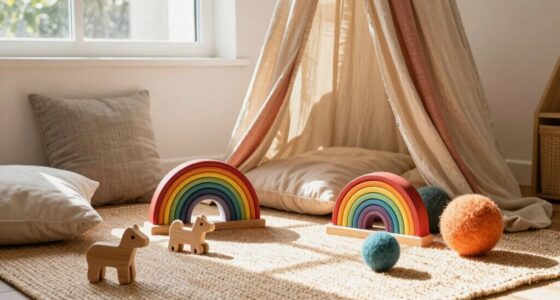
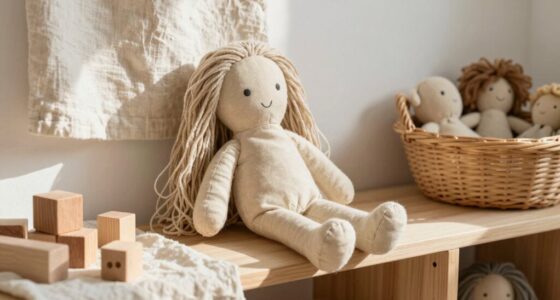
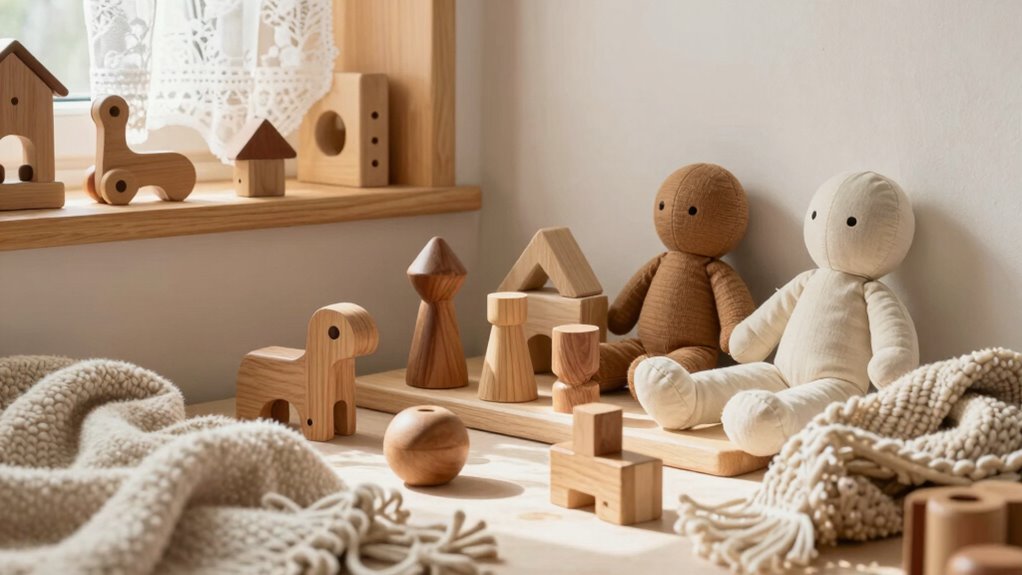
In a Waldorf-inspired home, simplicity and naturalness are key. Choose toys that inspire imagination and open-ended play rather than overly commercialized, battery-operated options. Wooden animals, stacking blocks, and handcrafted dolls are excellent choices because they foster creativity and connection to nature. Pay attention to how the toy feels in your hand—smooth, warm, and inviting—since this tactile quality supports sensory development. Additionally, consider how the toy fits into your home’s aesthetic; natural toys often blend seamlessly into a warm, calming environment, reinforcing the Waldorf principles of beauty, nature, and simplicity.
Ultimately, selecting natural toys involves balancing eco-friendly materials with safety considerations. You want toys that are safe, sustainable, and capable of stimulating your child’s imagination. By carefully choosing toys made from natural, non-toxic materials and ensuring they’re well-crafted, you create a nurturing space that promotes healthy development and a deep respect for the environment.
natural wooden toys for children
As an affiliate, we earn on qualifying purchases.
As an affiliate, we earn on qualifying purchases.
Frequently Asked Questions
Are Natural Toys Suitable for All Age Groups?
Natural toys are suitable for all age groups because they’re made with eco-friendly materials and designed to be safe and stimulating. Younger children benefit from soft, simple, and age-appropriate designs that promote sensory exploration, while older kids enjoy toys that encourage creativity and problem-solving. Always check for age recommendations to guarantee safety, and choose toys that match developmental stages, fostering healthy growth and environmentally conscious play for everyone.
How Can I Identify Genuinely Natural Toys From Synthetic Ones?
Imagine holding a toy that feels warm and smooth, free from the cold, slick surface of synthetic plastics. To identify genuine natural toys, check labels for absence of chemical additives and inquire about manufacturing processes, ensuring they prioritize natural materials. Authentic toys often have a subtle, earthy scent and imperfect textures, reflecting their natural origin. Trust your senses and choose toys that resonate with the warmth and simplicity of nature.
Do Natural Toys Require Special Maintenance or Cleaning?
Natural toys generally require gentle cleaning methods to maintain their quality. You should use mild soap and water or a damp cloth for cleaning, avoiding harsh chemicals or soaking. Regular maintenance tips include inspecting for splinters or damage, and storing toys in a dry, well-ventilated space. This helps preserve the natural materials and guarantees safety, keeping your child’s play environment healthy and eco-friendly.
Are Natural Toys More Durable Than Plastic Ones?
Natural toys often aren’t more durable than plastic ones, but they offer fewer concerns about plastic toxicity and are made from eco-friendly materials that support sustainability. You might find that natural toys wear out faster with active play, but their safety and environmental benefits outweigh this. Plus, they often develop a charming patina, adding to their character and appeal, making them a worthwhile choice for a conscious, Waldorf-inspired home.
What Safety Standards Should Natural Toys Meet?
Safety standards for natural toys are like a sturdy foundation—crucial for peace of mind. You should verify they meet certifications like ASTM, EN71, or CE, confirming they’re made from non-toxic materials and free from harmful chemicals. These standards help minimize environmental impact and protect your child’s health. Always check that the toys are smooth, splinter-free, and crafted from sustainable, non-toxic materials for safe, eco-friendly play.
As an affiliate, we earn on qualifying purchases.
Conclusion
By choosing natural toys, you create a wonderland that sparks your child’s imagination and nurtures their soul. Every handcrafted piece is a gateway to endless adventures, transforming your home into a sanctuary of creativity and warmth. When you opt for these timeless treasures, you’re not just selecting toys—you’re cultivating a magical environment where dreams grow wild and free. Embrace the beauty of natural toys and watch your child’s world blossom into something truly extraordinary.
non-toxic wooden stacking blocks
As an affiliate, we earn on qualifying purchases.
As an affiliate, we earn on qualifying purchases.
As an affiliate, we earn on qualifying purchases.
Fall Picks
fall essentials
As an affiliate, we earn on qualifying purchases.