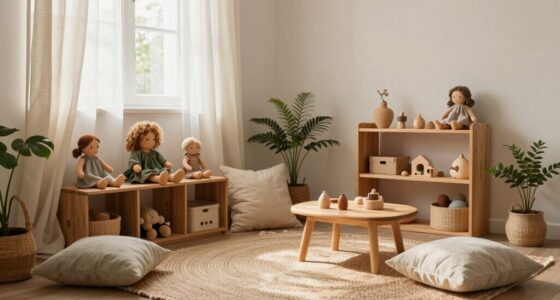
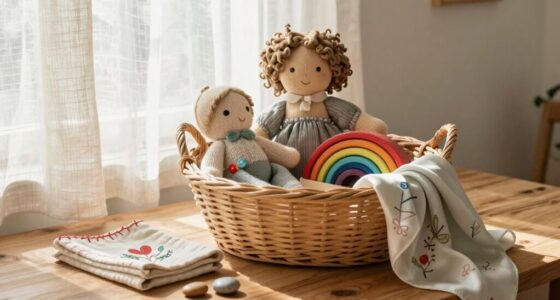
To create an easy nature table for your family new to Waldorf, start with simple, eco-friendly materials like natural fabrics, wooden bowls, and reusable containers. Collect thoughtfully from your local environment—stones, feathers, flowers—and arrange them to reflect seasonal changes. Keep the display inviting and simple, updating it throughout the year. This approach encourages mindful observation and a deeper connection with nature. If you want more ideas, you’ll find helpful tips to inspire your ongoing exploration.

Get health and wellness essentials delivered free — and shop member deals
- Fast, free delivery on millions of items
- Access to Prime Big Deal Days deals on October 6–7
- Prime Video, Amazon Music and more included
Key Takeaways
- Use natural, eco-friendly materials like stones, feathers, flowers, and twigs for simple, inviting displays.
- Incorporate seasonal elements such as leaves, pinecones, or shells to reflect seasonal changes.
- Involve children in collecting and arranging items to foster creativity and connection to nature.
- Keep displays minimal and thoughtfully arranged to encourage exploration and mindfulness.
- Regularly update the table with new natural elements to maintain engagement and celebrate nature’s cycles.

Creating a nature table is a wonderful way for families to connect with the outdoors and bring a bit of the natural world into your home. This simple yet meaningful activity encourages curiosity, observation, and a respect for nature. When setting up your table, focus on using eco friendly materials. Choose natural fabrics, wooden bowls, and biodegradable or reusable containers to keep your display sustainable. These choices not only minimize environmental impact but also model eco-conscious habits for your children. Incorporating seasonal displays keeps your nature table fresh and relevant throughout the year. As seasons change, you can add new elements like colorful autumn leaves, pinecones in winter, blooming flowers in spring, or shells and sand in summer. These updates help children observe and appreciate the natural shift around them.
Start by collecting items from your local environment—stones, feathers, flowers, or twigs—making sure to gather responsibly and respectfully. You don’t need to buy anything fancy; often, the best pieces come from your own backyard or park visits. Arrange these items thoughtfully on your table, creating a miniature landscape or story scene. For example, you might set up a small forest scene with moss, tiny animals, and tree branches, or craft a beach scene with shells and driftwood. Keep the display simple and inviting, allowing your children to explore and add their own touches. The act of creating and maintaining the display becomes an ongoing activity that fosters observation skills and a deeper connection to nature. Additionally, you can enhance your display by incorporating natural elements that promote sustainability, such as using natural filtration systems for any water features or plants that support local biodiversity. Understanding the importance of local ecosystems can deepen children’s appreciation for the environment and their role within it. Engaging children in these practices helps instill a sense of responsibility for protecting natural resources.
As you update the table for each season, invite your children to participate in the process. Let them choose what to add, encouraging their creativity and decision-making. This shared activity promotes mindfulness and patience, as they learn to appreciate the beauty in small details. Remember to handle everything gently, especially delicate items like flowers or feathers, and teach your children to respect nature by returning any collected items to their environment when appropriate. Engaging children in responsible collecting not only teaches respect for nature but also emphasizes the importance of conservation. It can be helpful to introduce simple concepts related to biodiversity during these activities, fostering a broader understanding of different species and their habitats. Your focus should be on making the process enjoyable and educational rather than perfect. Ultimately, a well-curated nature table becomes a living, breathing display that evolves with your family’s experiences and the changing seasons, fostering a lifelong love for the natural world.
As an affiliate, we earn on qualifying purchases.
Frequently Asked Questions
How Often Should I Update the Nature Table?
You should update your nature table with the seasons, reflecting seasonal changes, roughly every few weeks or as the seasons shift. This keeps the display fresh and relevant, helping children connect to nature’s cycles. Incorporate display rotation to showcase new natural finds and adapt to changing weather. Regular updates foster curiosity and deepen understanding of nature’s rhythm, making the table a dynamic, engaging part of your family’s Waldorf experience.
What Are Safe Materials for Young Children?
You should choose natural elements and child-safe materials for your nature table. Think smooth stones, soft pinecones, gentle shells, and wooden figures—items that invite touch and wonder. Focus on non-toxic paints, untreated wood, and organic fabrics to keep your little ones safe. Use materials that are durable yet gentle, inspiring curiosity without risk, creating a peaceful space where nature and safety come together perfectly for your child’s exploration.
Can I Include Artificial or Synthetic Items?
You can include artificial accessories or synthetic decorations on your nature table, but it’s best to do so sparingly. While they add color and variety, they don’t offer the natural textures and sensory experiences Waldorf emphasizes. Use artificial items intentionally, perhaps to complement natural elements, and balance them with real, natural materials. This way, your table remains inviting, educational, and aligned with Waldorf principles.
How Do I Keep the Table Organized?
Keeping your nature table organized is like tending a gentle garden, where each item has its place. You can use small baskets, trays, or jars to sort natural objects, creating a clear, inviting space. Regularly tidy and rotate items to maintain a fresh, inspiring environment. This helps foster a strong nature connection and encourages creative arrangement, making it easier for your family to enjoy and learn from the table daily.
What Are Budget-Friendly Nature Table Ideas?
You can create budget-friendly nature table ideas by focusing on seasonal displays and DIY arrangements. Use free natural materials like leaves, stones, pinecones, and flowers gathered from outdoor walks. Arrange these items creatively to reflect each season’s beauty, and swap them out regularly. You don’t need expensive decor—simple, natural elements can inspire wonder and curiosity in your family while keeping costs low and the table organized.
eco-friendly nature table materials
As an affiliate, we earn on qualifying purchases.
As an affiliate, we earn on qualifying purchases.
Conclusion
Creating a nature table is like opening a magical door to endless wonder and discovery right in your home. As you gather leaves, stones, and flowers, you’ll forge a deeper bond with the natural world—and with your family. Every new item becomes a tiny treasure, a piece of the great outdoors tucked into your everyday life. Before you know it, your table will be overflowing with beauty, turning your space into a breathtaking, enchanted forest—no passport required!
As an affiliate, we earn on qualifying purchases.
reusable containers for nature display
As an affiliate, we earn on qualifying purchases.
As an affiliate, we earn on qualifying purchases.
Fall Picks
fall essentials
As an affiliate, we earn on qualifying purchases.