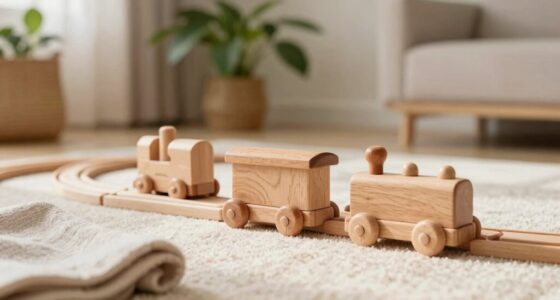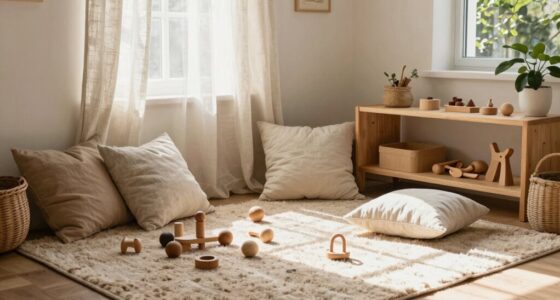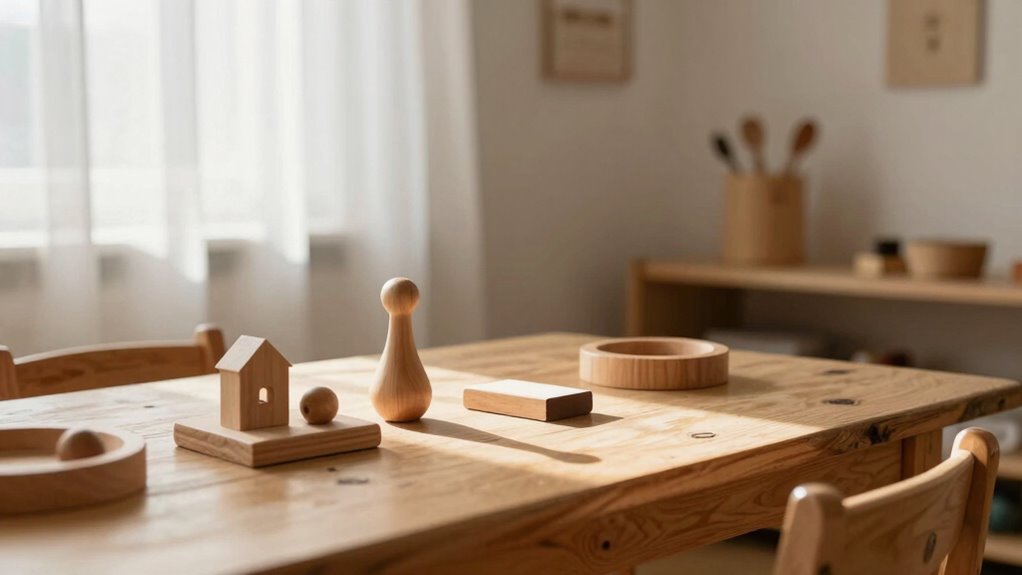

Waldorf play favors simplicity over stimulation because it encourages you to focus on natural, uncomplicated materials that promote genuine creativity and calmness. Instead of electronic toys with flashing lights and noisy sounds, you’re guided toward soft textures and versatile objects like wooden blocks or cloth dolls. This approach helps children develop their senses, patience, and problem-solving skills while avoiding sensory overload. If you’re curious about how simple play benefits growth, keep exploring this gentle, mindful approach.
Key Takeaways
- Waldorf play emphasizes natural, simple materials to promote genuine creativity and avoid sensory overload.
- Overstimulation from electronic toys can hinder concentration, imagination, and sensory development.
- Simple materials foster open-ended play that enhances problem-solving, patience, and emotional resilience.
- Fewer, meaningful items encourage deeper engagement and a focus on the process of play.
- Natural textures and minimal stimuli support emotional well-being and balanced development.

Many parents and educators are turning to Waldorf play because it emphasizes simplicity over overstimulation. In today’s fast-paced world, children are constantly bombarded with bright screens, loud noises, and a flood of electronic toys. While these might seem exciting at first, they often lead to sensory overload, making it harder for kids to focus, imagine, or relax. Waldorf play rejects this chaos, encouraging you to provide children with natural, simple materials that foster genuine creativity and deep engagement. Instead of flashy gadgets, you’re guided to offer wooden blocks, cloth dolls, or simple art supplies. These items don’t distract with flashing lights or sounds but invite children to explore their senses slowly and intentionally.
When you choose Waldorf-inspired play, you recognize that overstimulation from electronic toys can hinder a child’s development. Electronic toys, with their constant flashing lights, beeping sounds, and rapid interactions, can overload a child’s senses and diminish their ability to concentrate. By avoiding these overstimulating devices, you allow children to develop their senses at a more natural pace. They learn to observe, touch, and manipulate objects without the distraction of noise or bright visuals. This kind of play nurtures patience, focus, and a deep connection with their environment. You also give your child the chance to use their imagination, creating stories or scenarios with simple objects that can transform into anything they desire.
The beauty of Waldorf play is that it emphasizes quality over quantity. Instead of providing a multitude of electronic toys, you focus on fewer, more meaningful items that encourage open-ended play. These simple materials can be used in countless ways, helping children develop problem-solving skills, fine motor skills, and emotional resilience. When your child isn’t overwhelmed by sensory overload, they’re more likely to enjoy the process rather than just the outcome. This approach promotes calmness and mindfulness, giving your child space to think, reflect, and create at their own pace. Incorporating natural materials further enhances sensory development and fosters a stronger bond with the environment. Additionally, understanding how color temperature adjustments can influence a child’s mood and attention can help create a more conducive play environment.
Additionally, choosing natural materials supports sensory development, which is crucial for a child’s overall growth and learning. In essence, Waldorf play champions the idea that less truly is more. By steering away from overstimulating electronic toys and offering simple, natural materials, you foster a play environment that nurtures your child’s senses, supports their emotional health, and encourages genuine learning. It’s about creating a balanced space where your child can thrive, explore, and develop a lifelong love of learning rooted in simplicity and authenticity.
wooden building blocks for children
As an affiliate, we earn on qualifying purchases.
As an affiliate, we earn on qualifying purchases.
Frequently Asked Questions
How Does Waldorf Play Support Emotional Development?
Waldorf play supports your emotional development by fostering emotional resilience and self-awareness. As you engage with simple, natural materials, you learn to manage your feelings and develop empathy. This unstructured play encourages you to explore your emotions at your own pace, building confidence and emotional strength. Through creative activities, you become more in tune with yourself and others, laying a foundation for healthy emotional growth and resilience.
Are Waldorf Toys More Durable Than Commercial Toys?
Imagine choosing a sturdy oak over a fragile glass sculpture—Waldorf toys are like that oak. You’ll find they’re more durable because of their high material quality and thoughtful craftsmanship. Their toy longevity surpasses commercial toys, which often use cheaper materials that wear out quickly. With Waldorf toys, your child enjoys lasting play, and you get peace of mind knowing they’re built to stand up to everyday adventures.
Can Waldorf Play Be Integrated Into Mainstream Education?
You can definitely integrate Waldorf play into mainstream education by emphasizing art integration and maintaining classroom flexibility. Use natural materials and open-ended toys to encourage creativity and exploration. Adapt Waldorf principles to suit your curriculum, fostering a nurturing environment. This approach helps students develop holistically, balancing play and learning, while supporting diverse developmental needs. Incorporating Waldorf-inspired activities enriches classroom experiences without sacrificing structure or educational standards.
What Are Common Misconceptions About Waldorf Play?
Some folks think Waldorf play is dull, but that’s a misconception. It’s not about shunning excitement; it’s about nurturing your natural materials and sparking creative imagination. You might believe it’s all about quiet, slow activities, but in reality, you’re giving children the space to explore deeply and invent freely. It’s simple, yes, but that simplicity open up a world of rich, authentic play—no flashy distractions needed.
How Do Parents Introduce Waldorf Principles at Home?
You can introduce Waldorf principles at home by choosing natural materials like wood, wool, and cotton for toys and decor. Encourage imaginative exploration by providing simple, open-ended toys that inspire creativity. Limit screen time and create a calm, cozy environment that allows your child to engage in unstructured play. By emphasizing natural materials and fostering imagination, you support Waldorf’s focus on gentle, enriching experiences that nurture your child’s development.
As an affiliate, we earn on qualifying purchases.
Conclusion
By embracing simple play, you create a gentle garden where imagination can blossom without the wild overgrowth of stimulation. It’s like planting seeds in rich soil—nurturing creativity, patience, and self-discovery. When you prioritize simplicity, you allow your child’s inner world to flourish naturally, unburdened by constant noise. This peaceful approach helps their curiosity grow strong and steady, like a sturdy tree reaching for the sun—grounded, resilient, and beautifully free.
Waldorf-inspired open-ended toys
As an affiliate, we earn on qualifying purchases.
As an affiliate, we earn on qualifying purchases.
minimalist children's art supplies
As an affiliate, we earn on qualifying purchases.
As an affiliate, we earn on qualifying purchases.