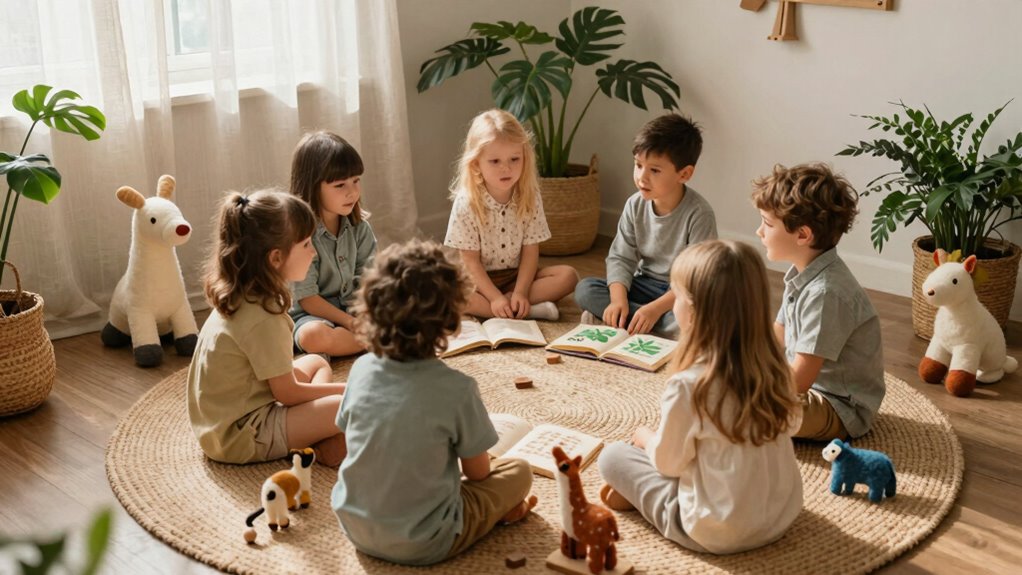

To make story time more Waldorf-inspired, create a cozy, clutter-free space using natural textiles and materials like wool blankets, wooden figures, or stones. Use slow, expressive narration with gentle pauses, varied tones, and soft gestures to engage the child’s imagination and emotions. Incorporate tactile objects and natural elements like leaves or moss to bring the story to life. Focus on presence and mindfulness, turning story time into a soothing, immersive ritual. Discover more ways to enrich your storytelling techniques as you explore further.

Get health and wellness essentials delivered free — and shop member deals
- Fast, free delivery on millions of items
- Access to Prime Big Deal Days deals on October 6–7
- Prime Video, Amazon Music and more included
Key Takeaways
- Use slow, expressive narration with pauses and varied tones to create an immersive, multisensory storytelling experience.
- Incorporate natural materials like stones, wool, and handcrafted puppets to visualize and physically connect with the story.
- Create a cozy, clutter-free space with natural textiles, leaves, and flowers to foster a warm, inviting environment.
- Integrate gentle sounds or frequencies to enhance the calming atmosphere and deepen sensory engagement.
- Maintain a mindful, present approach, emphasizing reverence for the story and natural elements to nurture emotional connection.

Story time is a cherished part of the day, but you can deepen its impact by making it more Waldorf-inspired. Instead of simply reading from a book, focus on creating a rich, sensory experience that engages your child’s imagination and senses. One way to do this is by using storytelling techniques that emphasize slow, expressive narration, allowing your child to feel immersed in the story. Use pauses, varied tones of voice, and gentle gestures to bring characters and scenes to life. This not only makes the story more enchanting but also encourages your child’s active participation and emotional connection.
Incorporating natural materials into your storytelling environment enhances this experience even further. Gather items like smooth stones, soft wool, handcrafted puppets, or wooden figurines that relate to the story. These tangible objects turn storytelling into a multisensory activity, helping your child visualize and feel part of the narrative. For example, if the story involves a forest, you might bring out small wooden trees or moss to set the scene. Handling these natural materials allows your child to connect with the story on a deeper level, fostering an appreciation for nature and craftsmanship. This tactile engagement supports their sensory development and sparks their creative imagination. Additionally, introducing natural materials into the storytelling environment encourages a closer relationship with the natural world, aligning with Waldorf principles. Creating such sensory-rich environments helps nurture your child’s developing senses and emotional awareness. Incorporating nature-based elements can further enrich the storytelling experience by grounding it in the natural world.
Creating a warm, inviting space for story time is also essential. Use natural textiles such as linen or wool blankets, and ensure the area is free of clutter. A cozy nook filled with natural materials makes your child feel safe and nurtured, encouraging them to relax and fully engage in the storytelling experience. You can also incorporate elements from nature, like leaves or flowers, to enhance the atmosphere. When your environment is thoughtfully arranged, story time becomes more than just a routine — it transforms into a sacred ritual that nurtures your child’s inner world. Additionally, integrating sound healing science into the environment through gentle background sounds or calming frequencies can elevate the sensory experience further. This mindful addition can help create a more calm and focused atmosphere that aligns with Waldorf principles. Engaging multiple senses in this way helps deepen your child’s connection to the stories and the natural environment.
Finally, embrace simplicity and presence during your storytelling sessions. Avoid rushing through stories or relying heavily on technology. Instead, focus on being fully present with your child, using your voice and natural materials to create a meaningful connection. This mindful approach helps your child develop a sense of reverence for stories and the natural world, core principles of Waldorf education. By blending storytelling techniques with natural materials and a calm, inviting space, you turn everyday story time into a nurturing, imaginative experience that nourishes your child’s inner life and love for stories.
natural wooden figurines for storytelling
As an affiliate, we earn on qualifying purchases.
As an affiliate, we earn on qualifying purchases.
Frequently Asked Questions
How Can I Incorporate Natural Materials Into Story Props?
You can incorporate natural materials into story props by using items with natural textures, like wooden blocks, stones, or shells, to create tactile and authentic elements. Handmade puppets crafted from wool, felt, or linen add warmth and charm, enhancing the storytelling experience. These natural and handmade props foster a deeper connection to the story, encouraging imagination and sensory engagement, which are central to Waldorf-inspired storytelling.
What Are Some Waldorf-Friendly Storytelling Techniques?
You can enhance storytelling by encouraging imaginative play, allowing children to act out parts of the story and deepen their connection. Incorporate sensory experiences with natural materials like soft fabrics, textured stones, or fragrant herbs, making the story feel more tangible. Use gentle voice modulation and pauses to create a calming atmosphere. By engaging their senses and imagination, you foster a Waldorf-friendly environment where stories come alive and resonate deeply.
How Do I Choose Stories That Align With Waldorf Principles?
You choose stories that celebrate mythic creatures and folk traditions, aligning with Waldorf principles by nurturing imagination and cultural awareness. Select tales that emphasize nature, moral lessons, and human connection, avoiding overly commercial or violent content. Opt for stories rooted in cultural heritage, featuring gentle storytelling and meaningful symbolism. This approach helps children connect with the world’s stories, fostering a sense of wonder, respect, and harmony in your Waldorf-inspired story time.
Should Stories Be Read Aloud or Told Orally?
Should stories be read aloud or told orally? Why not both? Your storytelling methods can blend reading with oral storytelling, enriching the experience. Consider the cultural influences behind the stories and how they come alive through your voice and gestures. Reading aloud offers clarity, while oral storytelling fosters intimacy and imagination. By combining these methods, you create a more engaging, Waldorf-inspired story time that honors tradition and sparks children’s creativity.
How Can Story Time Support Emotional Development?
During story time, you can support emotional development by choosing stories that explore feelings and relationships, helping children develop emotional awareness. Encourage them to identify emotions in characters, fostering empathy building. Use expressive voices and ask open-ended questions to deepen understanding. Creating a calming, reflective environment allows children to connect with stories emotionally, nurturing their ability to recognize and express their own feelings while understanding others better.
Waldorf-inspired tactile storytelling props
As an affiliate, we earn on qualifying purchases.
As an affiliate, we earn on qualifying purchases.
Conclusion
By gently weaving Waldorf-inspired elements into your story time, you create a space where imagination blooms and hearts feel nurtured. Embrace the subtle magic of nature, warm colors, and mindful storytelling to softly guide your little ones on their journey. When you nurture this gentle rhythm, you invite wonder and curiosity to flourish, making each story session a treasured moment of quiet growth. In these tender pauses, your connection deepens, and your shared stories become timeless treasures.
handcrafted puppets for children
As an affiliate, we earn on qualifying purchases.
As an affiliate, we earn on qualifying purchases.
natural textiles for kids' cozy space
As an affiliate, we earn on qualifying purchases.
As an affiliate, we earn on qualifying purchases.
Fall Picks
fall essentials
As an affiliate, we earn on qualifying purchases.