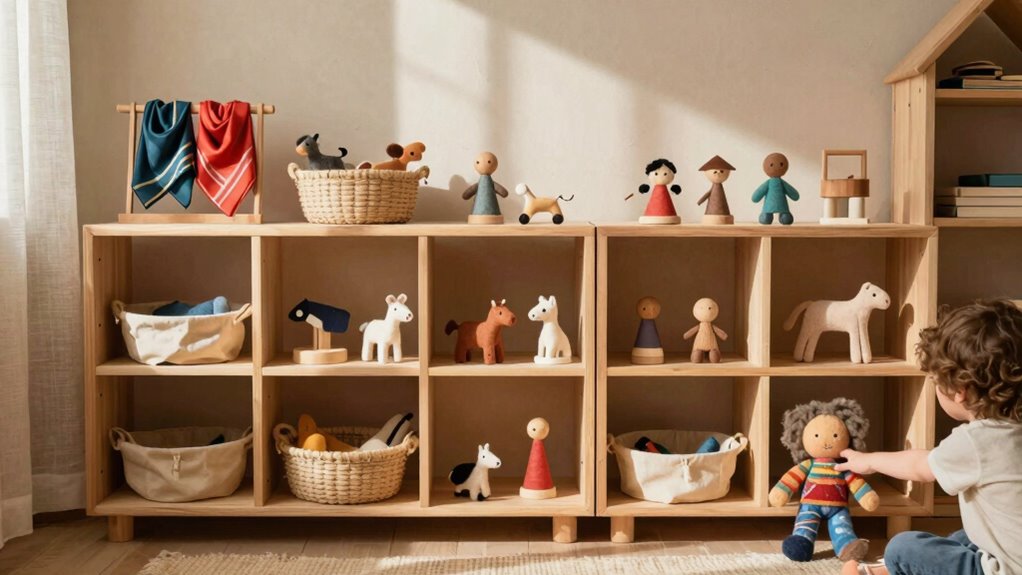

To build a Waldorf-inspired toy rotation, select natural, open-ended toys like wooden blocks, wool figures, and soft fabrics that foster imagination. Organize toys into manageable, themed groups and keep unused ones out of sight. Establish a consistent schedule to rotate toys regularly, helping to renew interest and support curiosity. Focus on creating a calm, intentional space that encourages slow, sensory-rich play. If you keep exploring, you’ll discover how to deepen your understanding of this nurturing approach.
Key Takeaways
- Categorize toys by type or theme to facilitate easy rotation and maintain a natural, organized environment.
- Limit the number of toys available at once to encourage focused, meaningful play experiences.
- Establish a consistent schedule (weekly or biweekly) for rotating toy sets to sustain curiosity.
- Store unused toys out of sight in labeled containers to keep the space clutter-free and inviting.
- Observe children’s preferences during play to adjust toy selections and rotation timing effectively.
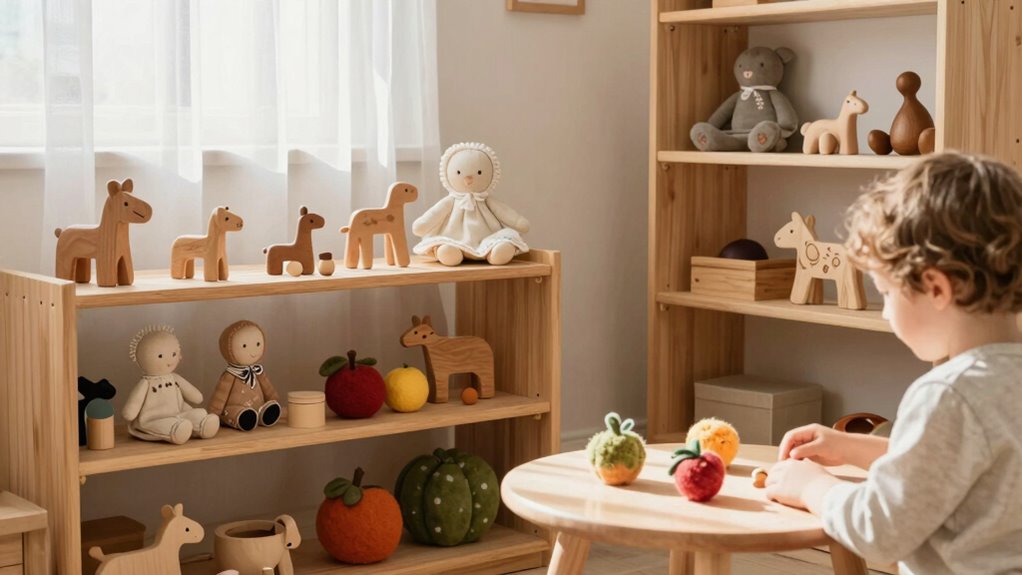
Building a Waldorf-Inspired Toy Rotation can transform your child’s play environment into a more focused and meaningful space. Instead of cluttered shelves overflowing with toys, you create a curated, intentional environment that encourages your child’s natural curiosity and deepens their engagement. This approach supports sensory development by allowing your child to explore a limited set of toys thoroughly, rather than rushing from one distraction to another. This promotes sensory awareness and helps develop fine motor skills as they manipulate objects with care and intention. Exploring emerging trends in digital publishing can also inspire creative ways to document and share your toy rotation process with other parents or educators. To build an effective rotation, start with selecting toys that foster imaginative play. Waldorf principles emphasize natural materials like wood, wool, and cotton, which stimulate the senses and invite open-ended use. Think of simple figures, play scarves, or wooden blocks—things that can be used in numerous ways, sparking creativity and story-building. Once you’ve gathered these toys, organize them into manageable groups, perhaps by type or theme. Keep in mind that the goal is to have your child focus on a few toys at a time, so avoid overwhelming their space with too many options. Incorporating natural elements into your toy selection can further enhance sensory engagement and align with Waldorf ideals. Additionally, understanding the cosmic connections between various natural elements and personal traits can inspire you to choose toys that align with your child’s unique interests and developmental needs. Recognizing the importance of balanced play can help you create a more harmonious environment that fosters growth and well-being. Next, determine a rotation schedule. You might choose to swap toys weekly or biweekly, or even daily if your child prefers frequent changes. The key is consistency—regularly revitalizing what’s available keeps playtime engaging and prevents boredom. When it’s time to rotate, store the toys not in use out of sight, perhaps in baskets or boxes labeled for easy access. This not only keeps the environment tidy but also builds anticipation for the next set of toys, fueling your child’s curiosity and sense of discovery. Furthermore, observing how your child interacts with each toy can give valuable insights into their evolving preferences and developmental trajectory. Creating a mindful play environment where children can connect with natural materials can also support their emotional and cognitive development. During play, encourage your child to explore each toy slowly and attentively, emphasizing quality over quantity. This mindful approach enhances sensory development, as they notice subtle details and textures, and nurtures their capacity for imaginative play, as they invent stories and scenarios inspired by their toys. By thoughtfully building and managing your toy rotation, you create a calming, enriching space where your child can develop their senses, imagination, and independence. With patience and consistency, this method transforms ordinary play into a purposeful, joyful experience that naturally aligns with Waldorf ideals.
wooden open-ended toys for children
As an affiliate, we earn on qualifying purchases.
As an affiliate, we earn on qualifying purchases.
Frequently Asked Questions
How Often Should I Update the Toy Rotation Schedule?
You should update your toy rotation schedule every 2 to 4 weeks, depending on your child’s interest and toy storage capacity. Keep an eye on how often toys are played with and rotate them to maintain engagement. Consistent rotation timing prevents clutter and keeps toys fresh. Regularly reassess your child’s preferences and adjust the schedule as needed, ensuring a balanced mix of toys in your storage system.
What Are Common Mistakes to Avoid in Toy Rotation?
You should avoid common mistakes like overwhelming your child with too many toys at once, which can hinder parent-child communication and engagement. Instead, use creative storage solutions to keep toys organized and easily accessible, making rotation smoother. Also, don’t forget to observe your child’s interests to guarantee the toys you choose truly stimulate their development. Regularly adjusting your approach helps maintain a balanced, enriching toy environment.
How Do I Introduce New Toys to My Child?
Think of introducing new toys as opening a treasure chest. You gently select toys aligned with your child’s preferences, like finding gems that spark curiosity. Present them with a story or a special moment to make the toy feel extraordinary. Observe their reactions, and let their child preferences guide how and when you introduce new items. This creates a sense of wonder and invites your child to explore joyfully.
Can I Incorporate Digital or Electronic Toys?
Yes, you can incorporate digital integration and electronic toys thoughtfully into your child’s toy rotation. Choose electronic toys that promote creativity, problem-solving, and calm engagement, avoiding overstimulation. Limit screen time and prioritize unplugged, natural toys. Rotate electronic toys alongside traditional Waldorf-inspired items, ensuring they complement your child’s developmental needs without dominating play. This balanced approach helps foster imagination while gently introducing technology in a mindful way.
How Do I Handle Toys That Are Damaged or Broken?
When you find a damaged or broken toy, start with toy repair if possible—many issues can be fixed with simple glue or sewing. If repair isn’t feasible, consider broken toy disposal to keep your space safe and clutter-free. You can also repurpose parts for other projects or donate intact toys. Handling broken toys thoughtfully guarantees your toy rotation remains safe, sustainable, and enriching for your child.
Waldorf-inspired natural toy set
As an affiliate, we earn on qualifying purchases.
As an affiliate, we earn on qualifying purchases.
Conclusion
By creating a Waldorf-inspired toy rotation, you’re planting seeds of curiosity and nurturing your child’s imagination. Think of your toy collection as a blooming garden—rotating toys allows each one to flourish at its own pace, keeping playtime fresh and meaningful. With patience and intention, you’ll cultivate a space where your child’s creativity can grow wild and free, just like a well-tended garden bursting with life and wonder.
As an affiliate, we earn on qualifying purchases.
As an affiliate, we earn on qualifying purchases.