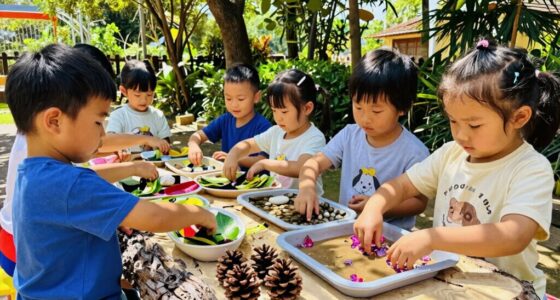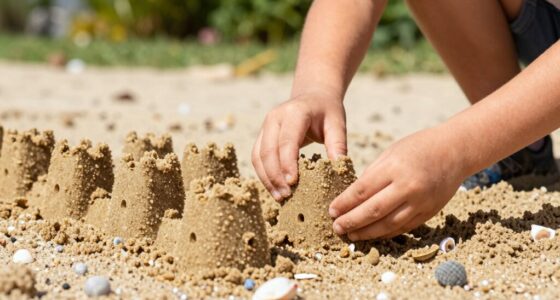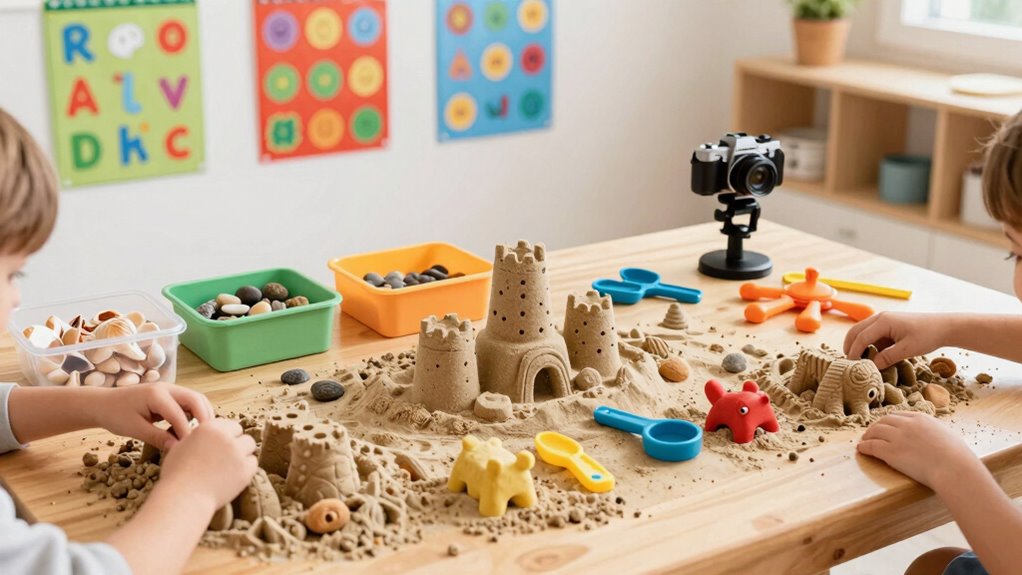

To make sand play more educational at home, you’ll want to add tools like scoops, funnels, and brushes to develop motor skills. Incorporate themed activities, such as building or sorting by color, to boost cognitive abilities. Use textured elements and encourage storytelling to foster sensory and emotional growth. Asking open-ended questions can also enhance language skills. Keep exploring these ideas, and you’ll find new ways to support your child’s learning through sand play.

Get health and wellness essentials delivered free with Prime
- Fast, free delivery on millions of items
- Prime Video, Amazon Music and more included
- Member-only deals all year
Key Takeaways
- Incorporate themed activities like construction or storytelling to enhance cognitive and language development during sand play.
- Use a variety of textured tools and elements to stimulate sensory processing and fine motor skills.
- Introduce sorting, counting, and grouping tasks within sand activities to promote math readiness and problem-solving.
- Encourage expressive play by creating scenes or stories, fostering creativity and emotional understanding.
- Guide children with open-ended questions to develop critical thinking and language skills during sensory exploration.
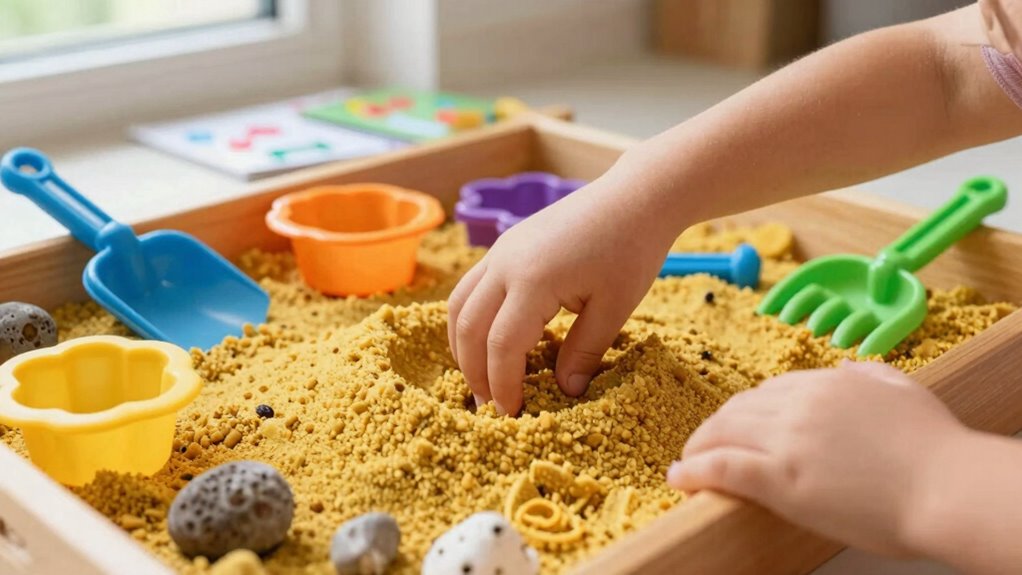
Have you ever wondered how to turn simple sand play into a valuable learning experience at home? It’s easier than you might think. Sand play isn’t just fun; it can be a powerful tool for boosting your child’s sensory development and fine motor skills. By intentionally guiding their play, you create opportunities for learning that are both engaging and educational. One way to do this is by introducing different textures, tools, and activities that challenge their senses and motor control.
Start by providing a variety of tools like scoops, funnels, brushes, and molds. These items encourage your child to grasp, pinch, and manipulate, which strengthens their fine motor skills. As they dig, pour, and mold the sand, they develop hand-eye coordination and precise finger movements. To enhance sensory development, you can add elements like textured stones, shells, or even scented herbs into the sand. These additions stimulate different senses, making the experience richer and more immersive. Encourage your child to describe what they feel, smell, and see, fostering language skills alongside sensory growth.
Using tools and textured elements enhances fine motor skills and sensory development during sand play.
You can also create themed activities to make sand play more educational. For example, set up a mini “construction site” with toy trucks and building blocks, prompting your child to transport sand and construct structures. This not only makes play more purposeful but also helps them understand spatial relationships and problem-solving. Incorporate counting and sorting games by asking your child to find and group objects by color, size, or shape within the sand. These activities promote cognitive development and fine motor control simultaneously. Additionally, understanding the importance of toilet maintenance and repairs can teach children about taking care of their belongings and basic hygiene practices, reinforcing responsibility during play.
In addition, you can introduce storytelling into sand play. Encourage your child to create scenes or stories with their sand creations, which fosters creativity, language skills, and emotional expression. As they manipulate the sand to build scenes, they refine their grasp and hand movements. Incorporating different textures and materials can also introduce concepts of texture differentiation, enriching their sensory vocabulary. Exploring sensory integration during sand play can further support their overall sensory processing development. Understanding that emotional needs influence behavior can help guide your approach to their play and learning. To deepen their understanding of how their bodies and senses work together, you might also discuss sensory processing concepts in simple terms. Be sure to ask open-ended questions like “What are you building?” or “Tell me about your scene,” which promotes verbal skills and critical thinking.
As an affiliate, we earn on qualifying purchases.
Frequently Asked Questions
What Are the Best Age Groups for Educational Sand Play?
The best age groups for educational sand play are preschoolers and early elementary children, typically ages 3 to 7. At this stage, kids enjoy sensory exploration and can develop fine motor skills through engaging activities. You can encourage creative storytelling by guiding them to build castles or scenes, helping them learn problem-solving and language skills naturally. This age group benefits most from structured yet playful sand activities that foster learning and imagination.
How Can I Incorporate Science Concepts Into Sand Play?
Did you know that hands-on sensory exploration boosts brain development by up to 50%? To incorporate science concepts into sand play, encourage your child to conduct simple scientific experiments, like observing how water changes the sand’s texture or testing different materials’ absorption. Challenge them to predict outcomes and explain results. This approach makes scientific ideas tangible, engaging their curiosity and deepening their understanding through fun, interactive sensory exploration.
Are There Safe, Non-Toxic Sand Options for Children?
Yes, there are safe, non-toxic options for children’s sand play. You can choose artificial sand made from non-toxic, BPA-free materials, which mimics real sand without the mess or safety concerns. Look for products labeled as non-toxic and child-safe, ensuring they’re free from harmful chemicals. These options provide a safe environment for kids to explore and learn through sensory play while giving you peace of mind about their health.
How Do I Clean and Maintain Sand Play Areas?
Keep your sand play area sparkling by following simple cleaning techniques and maintenance tips. Regularly sift through the sand to remove debris and dampen it slightly to prevent dust. Use a gentle brush for cleaning edges and wash plastic containers with soap and water weekly. To keep things in tip-top shape, cover the sand when not in use, and replace it periodically to guarantee a safe, fun environment that remains inviting and hygienic.
Can Sand Play Support Sensory Development Effectively?
Yes, sand play can support sensory development effectively. It encourages sensory integration by engaging your child’s tactile exploration skills, helping them process different textures and sensations. As they dig, build, and sift through the sand, they refine their fine motor skills and develop a better understanding of their sensory environment. Plus, this hands-on activity promotes creativity and focus, making it a valuable tool for sensory development at home.
As an affiliate, we earn on qualifying purchases.
Conclusion
By turning your sand play into a lively classroom, you’re planting seeds of curiosity and growth. Think of your sandbox as a treasure chest, filled with endless learning gems waiting to be uncovered. With a little creativity and some guiding hands, you transform simple grains into worlds of discovery. So, dig deep, sprinkle in some knowledge, and watch your child’s imagination blossom like a vibrant garden in full bloom. Your home becomes a playground of endless educational adventures.
As an affiliate, we earn on qualifying purchases.
As an affiliate, we earn on qualifying purchases.
Halloween Picks
halloween
As an affiliate, we earn on qualifying purchases.