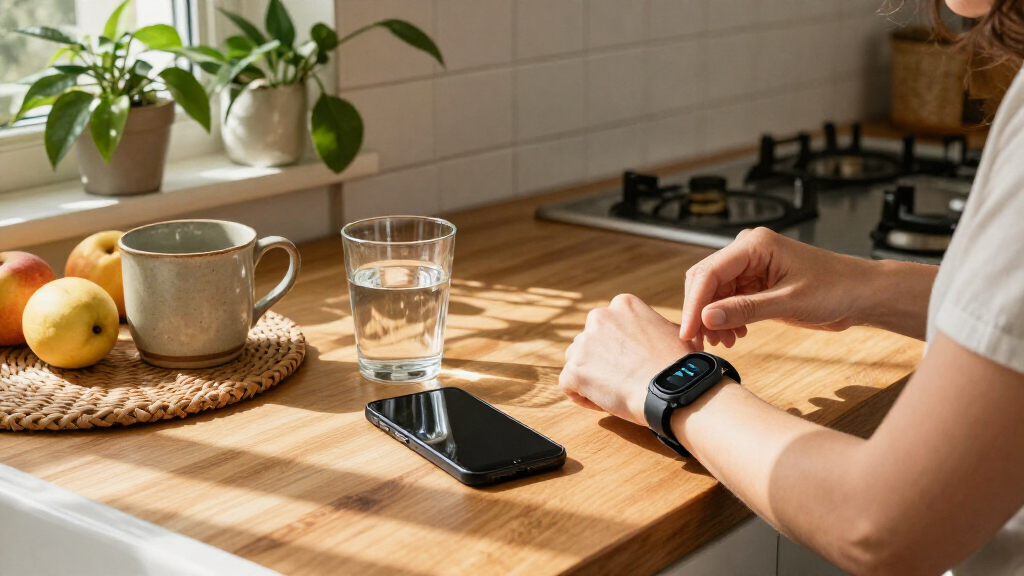

Personal wellness trackers are easiest to compare when the decision is specific: do you want a quiet wearable centered on sleep and recovery, or a more affordable band that makes activity and workout information visible on your wrist? Oura Ring 4 and Fitbit Charge 6 represent those two approaches. Oura is a screen-free ring with a polished app and a strong focus on sleep, readiness, and longer-term patterns. Fitbit is a wrist-worn tracker with a display, exercise modes, heart-rate tools, and everyday smart features.

Get health and wellness essentials delivered free with Prime
- Fast, free delivery on millions of items
- Prime Video, Amazon Music and more included
- Member-only deals all year

And Per Se Wellness Journal – Self-Care Daily Journal for Women with Habit Tracker, Diet & Goals, Undated, 6.5" x 8", Original Be…
- ✔ Format: Undated wellness and self-care journal
- ✔ Pages: 192
- ✔ Page size: 6.5 x 8 inches

Self-Care Journal with Wellness Trackers, Mood Log & Reflection
- ✔ Format: Daily self-care journal
- ✔ Page size: 8.3 x 11.2 inches
- ✔ Binding: Spiral-bound

Filofax Personal Wellness Tracker Refill (Model 132688)
- ✔ Format: Organizer refill
- ✔ Calendar type: Weekly
- ✔ Sheets: 56
The tradeoff goes beyond ring versus band. Oura asks you to pay more for a discreet form and ongoing membership-backed insights; Fitbit offers more immediate functionality for less, but it is more noticeable and its most useful health analysis also depends on a Premium subscription. Choose Oura if nighttime comfort, recovery trends, and a low-profile design matter most. Choose Fitbit if workouts, visible stats, and value matter more.
At a Glance
| Criteria | Oura Ring 4 | Fitbit Charge 6 | Winner |
|---|---|---|---|
| Sleep and recovery | Strong sleep and readiness focus; no screen interruptions | Sleep stages and related health metrics, presented alongside activity data | A |
| Workout and activity tracking | Tracks activity and heart rate, but less suited to live workout feedback | Workout modes, on-wrist heart-rate display, GPS connection, and exercise tools | B |
| Everyday usability | Quiet, app-centered experience; no wrist display or smart notifications | Screen for stats, notifications, and supported smart features | B |
| Comfort and wearability | Lightweight ring; sizing and fit need care, and some activities may be awkward | Easy to check and adjust; band may be noticeable during sleep or some activities | Depends |
| Health insights and app | Detailed trends and guidance; many features require Oura membership | Broad Fitbit app features; deeper analysis requires Fitbit Premium | Depends |
| Upfront and ongoing cost | Higher purchase price plus recurring membership for full insights | Lower upfront price; Premium adds a recurring cost | B |
And Per Se Wellness Journal – Self-Care Daily Journal for Women with Habit Tracker, Diet & Goals, Undated, 6.5" x 8", Original Be…
The And Per Se Wellness Journal earns the top spot because it connects several parts of a daily routine in one guided place. Its pages cover sleep, meals, water, exercise, emotions, gratitude, habits, and goals, giving us a broader view of wellbeing than the Filofax refill’s weekly workout and habit emphasis. That range can help us see how routines relate: for example, whether sleep or hydration changes alongside mood and activity. The undated layout also removes calendar pressure, so we can begin when ready and resume after a gap without leaving dated pages behind.Its lay-flat hardcover makes regular writing easier at a desk or table, and the 100 gsm paper is intended to limit ink bleed. Compared with Teravon, this journal is more compact and offers a wide set of daily health prompts, but less room for extended reflection. It is designed for women, which may make its framing less suitable for readers seeking a gender-neutral journal. Its 6.5-by-8-inch footprint is manageable, though not as pocketable as the Filofax insert. Choose it when we want a self-contained daily tracker with balanced physical and emotional check-ins; skip it if we mainly need a planner insert or generous free-writing space.
Pros:
- Combines sleep, meals, water, exercise, emotions, gratitude, habits, and goals.
- Undated pages allow flexible starts and pauses.
- Lay-flat hardcover supports writing across the page.
- 100 gsm paper is designed to reduce ink bleed.
Cons:
- Its women-focused design may not suit every reader.
- The compact page size limits room for long notes.
- It is less convenient to carry than a small planner insert.
Best for: Adults who want one undated journal for daily health measures, habits, goals, and emotional check-ins.
Not ideal for: Readers who prefer gender-neutral framing, extensive free-writing space, or a refill that fits an existing organizer.
Bottom line: We recommend And Per Se for the broadest guided daily wellness routine, provided its audience framing and compact writing area fit us.
“We recommend And Per Se for the broadest guided daily wellness routine, provided its audience framing and compact writing area fit us.”
Self-Care Journal with Wellness Trackers, Mood Log & Reflection
Teravon is the strongest choice when wellness tracking needs room for context, not only check marks. Its guided daily check-ins cover feelings, self-care actions, small wins, and personal notes, while a weekly reflection page gives us a regular moment to look for patterns. Compared with And Per Se’s broad list of daily health measures, Teravon gives more prominence to mood and reflection. That makes it better suited to readers who want to connect routines with how they feel, even though the supplied details do not specify the same range of measures for sleep, meals, or water.The spiral binding helps the journal lie flat, and its 8.3-by-11.2-inch pages create room to write more freely than either And Per Se or the compact Filofax refill. The tradeoff is obvious if we carry a tracker everywhere: this is the largest format in the lineup. It is also a physical journal with no digital access or syncing, so it will not fit a workflow that depends on phone-based logs. Choose Teravon for a desk, home, or office routine where writing space and weekly reflection matter most; choose And Per Se instead if we want a more compact book with explicitly listed daily health metrics.
Pros:
- Guided daily pages cover feelings, self-care, small wins, and notes.
- Weekly reflection encourages reviewing habits and patterns.
- Mood and habit trackers organize recurring observations.
- Spiral binding supports a flat writing surface.
Cons:
- The large page size is less convenient for travel.
- Physical format does not provide digital access or syncing.
- Listed tracking details are less comprehensive on health metrics than And Per Se.
Best for: Readers who want guided mood and self-care notes, open writing space, and a weekly review ritual.
Not ideal for: People who need a portable journal, digital syncing, or a clearly specified set of daily health metrics such as water and sleep.
Bottom line: We would choose Teravon when reflection and generous writing room matter more than compact carry or a wide set of named health metrics.
“We would choose Teravon when reflection and generous writing room matter more than compact carry or a wide set of named health metrics.”
Filofax Personal Wellness Tracker Refill (Model 132688)
The Filofax refill takes a different approach from the two bound journals: it brings wellness prompts into a weekly planning system we may already use. The pack includes workout sheets, goal-setting pages, and habit tracking, so exercise and routines can sit beside appointments and other plans. That makes it the most integrated option for a Filofax Personal organizer or Clipbook, and the compact 95-by-171-millimeter sheets are easier to carry than Teravon’s full-size pages.This convenience comes with a firm compatibility boundary. The refill is designed for Filofax Personal organizers and Clipbooks and is not compatible with the Filofax refillable notebook; it is also limited to Personal size rather than larger formats. Its weekly focus is narrower than And Per Se’s daily tracking across sleep, meals, water, and emotions, and it provides less open reflection space than Teravon. The paper is 80 gsm, lighter than And Per Se’s 100 gsm stock, though the supplied description calls it a smooth writing surface. We would choose it when our organizer is already the center of our routine and weekly goals are enough. If we want a standalone tracker, broader daily health logging, or a system-independent journal, one of the other picks is a better fit.
Pros:
- Combines weekly workout, wellness goal, and habit pages.
- Fits Filofax Personal organizers and Clipbooks.
- Compact sheets can travel with an existing planner.
- 80 gsm white paper offers a smooth writing surface.
Cons:
- Not compatible with the Filofax refillable notebook.
- Limited to Personal size organizers.
- Weekly tracking is narrower than the daily prompts in And Per Se.
Best for: Filofax Personal organizer or Clipbook owners who want workout, goal, and habit tracking inside their weekly planner.
Not ideal for: People without a compatible Filofax Personal organizer, users of the refillable notebook, or anyone seeking broad daily health prompts.
Bottom line: We recommend this refill for Filofax Personal users who want wellness tracking embedded in weekly planning and accept its narrow compatibility.
“We recommend this refill for Filofax Personal users who want wellness tracking embedded in weekly planning and accept its narrow compatibility.”
As an Amazon Associate we earn from qualifying purchases.
Key Differences
The biggest practical difference is when and how you interact with the device. Oura is designed to fade into the background. It records around-the-clock signals and turns them into sleep and readiness patterns in its app, making it a good fit for people who want to reflect on recovery without checking a screen throughout the day. Fitbit puts information on your wrist. You can glance at activity, heart rate, and workout metrics during the day, which is more useful when exercise feedback is part of the goal.
Cost and commitment change the value calculation. Fitbit Charge 6 has a lower purchase price and includes useful day-to-day functions, though a Premium subscription unlocks additional analysis. Oura costs more to buy and relies on membership for much of its ongoing insight. That premium can make sense if the ring format and recovery focus match your habits. If you mainly want step counts, workout tracking, and a screen, paying extra for Oura is hard to justify.
Detailed Comparison
Sleep and recovery (Oura Ring 4 wins — moderate)
Oura wins for people whose main goal is to understand sleep quality and daily readiness. Its ring format avoids a bright wrist display, and its app puts recovery patterns near the center of the experience. Fitbit also tracks sleep and health metrics, but those sit within a broader activity-focused product. The gap is moderate: Fitbit covers sleep, while Oura makes sleep and recovery the central reason to wear it. Choose Oura if you expect to use those trends to shape rest and training; choose Fitbit if sleep is one metric among many.
Workout and activity tracking (Fitbit Charge 6 wins — major)
Fitbit wins for active workouts. Its screen can show exercise information as you go, and it includes workout modes and tools that make tracking more direct. Oura can record movement and heart-rate data, but its screen-free design means it is less useful for checking live metrics. This is a major difference for runners, gym users, or anyone who wants guidance during a session. Oura remains suitable for general activity and recovery context, but Fitbit is the clearer pick when workout feedback matters.
Everyday usability (Fitbit Charge 6 wins — moderate)
Fitbit wins on immediate access: the display makes daily activity and selected notifications visible without opening an app. Oura takes a more restrained approach, asking users to consult the app for its insights and offering no wrist-based glance screen. The difference is moderate because it depends on whether a display is useful or distracting to you. Choose Fitbit for quick checks and wrist tools; choose Oura if you prefer a wearable that stays out of sight.
Comfort and wearability (moderate difference)
There is no universal winner. Oura is small and lacks a screen, which some people find easier to wear overnight. A ring can feel intrusive during weightlifting or hands-on work, and getting the right size matters. Fitbit is easy to adjust and remove, but a band can be noticeable during sleep or daily tasks. This is a moderate, personal difference. Consider your sleeping habits, work, and exercise: a ring can be less obtrusive at night, while a removable band may suit changing activities better.
Health insights and app (moderate difference)
This is close because both products pair measurements with app-based interpretation, and both reserve some deeper features for paid membership. Oura’s strength is a focused view of sleep, readiness, and longer-term trends. Fitbit’s app spans activity, workouts, and broader daily tracking, with Premium adding analysis and other features. The winner depends on the questions you want the app to answer. The gap is moderate in focus, but less clear in overall capability: Oura suits recovery-minded users, while Fitbit suits people who want a broader fitness companion.
Upfront and ongoing cost (Fitbit Charge 6 wins — major)
Fitbit wins on upfront value. Charge 6 costs less to start and provides a screen and workout features in the same device. Oura requires a larger initial spend, followed by a membership for its full insight experience. Fitbit Premium can also add a recurring expense, so compare the price of the device and the subscription you actually plan to keep. The difference is major for budget-conscious buyers. Oura’s extra cost is worth paying only if its ring design and recovery-centered experience are the point of the purchase.
Oura Ring 4: Pros and Cons
Pros:
- Discreet ring design without a wrist display
- Strong emphasis on sleep, readiness, and recovery trends
- Comfortable for many users to wear overnight
Cons:
- Higher purchase price and recurring membership for full insights
- No screen for live workout stats or quick checks
- Ring fit may not suit weight training or hands-on work
Fitbit Charge 6: Pros and Cons
Pros:
- Lower upfront cost
- Screen provides quick access to activity and workout information
- Broader fitness and everyday features in a wrist-worn device
Cons:
- A wrist band may feel noticeable during sleep
- Some advanced app insights require Fitbit Premium
- Less centered on a dedicated recovery and readiness experience
Who Should Choose What
Choose Oura Ring 4 if:
- You care most about sleep quality, readiness, and recovery patterns.
- You want a screen-free wearable that stays discreet through the day and night.
- You are willing to pay more for a ring format and focused health insights.
Choose Fitbit Charge 6 if:
- You want workout stats and activity information visible on your wrist.
- You want a lower-cost tracker with broader day-to-day fitness features.
- You prefer a band you can remove or adjust easily for different activities.
Skip both if: Skip both if you need clinical-grade health monitoring or a sports watch with advanced navigation and training tools; compare devices built for those needs.
Value for Money
Fitbit Charge 6 is the better value for most people who want a general-purpose personal wellness tracker. Its lower upfront cost buys a screen, workout tools, and everyday activity tracking, so it answers more routine questions without requiring a premium-priced device. Factor in Fitbit Premium only if the extra app features matter to you.
Oura Ring 4 is worth paying more for when the ring form solves a real comfort or style problem and its sleep and recovery emphasis will shape your choices. The membership is part of the cost of getting its fuller insights, not a minor afterthought. If you will mainly check steps or record workouts, the extra spend is unlikely to pay off.
Final Verdict
For most buyers comparing personal wellness trackers, choose Fitbit Charge 6. It offers the stronger mix of visible workout feedback, everyday features, and lower upfront cost. Choose Oura Ring 4 if sleep and recovery are your top priorities and you specifically want a discreet ring without a screen. The deciding factor is whether your daily routine needs on-wrist workout information or a quieter focus on overnight patterns. Pay more for Oura only when that second experience is valuable enough to justify both the ring and its membership.
Frequently Asked Questions
Which is better for sleep tracking, Oura Ring 4 or Fitbit Charge 6?
Oura Ring 4 is the better fit if sleep and recovery are your main priorities because its app centers those patterns. Fitbit Charge 6 also tracks sleep, but it is a broader activity tracker. Individual readings are estimates, so neither should be treated as a medical diagnosis.
Which tracker is better for workouts?
Fitbit Charge 6 is better for workouts when you want to see activity information on your wrist and use exercise modes. Oura can contribute activity and recovery context, but its screen-free design is less suited to live workout feedback.
Does Oura cost more than Fitbit?
Oura Ring 4 generally has a higher upfront price and a membership for its full insights. Fitbit Charge 6 costs less to buy, though Fitbit Premium adds a subscription if you want its paid features. Compare the full cost over the time you expect to use the tracker.
Should I buy a ring or a wrist band for wellness tracking?
Pick a ring if you want a discreet wearable with a strong sleep and recovery focus and do not need a display. Pick a band if you want easy access to workout and activity information, plus a lower-cost entry point.