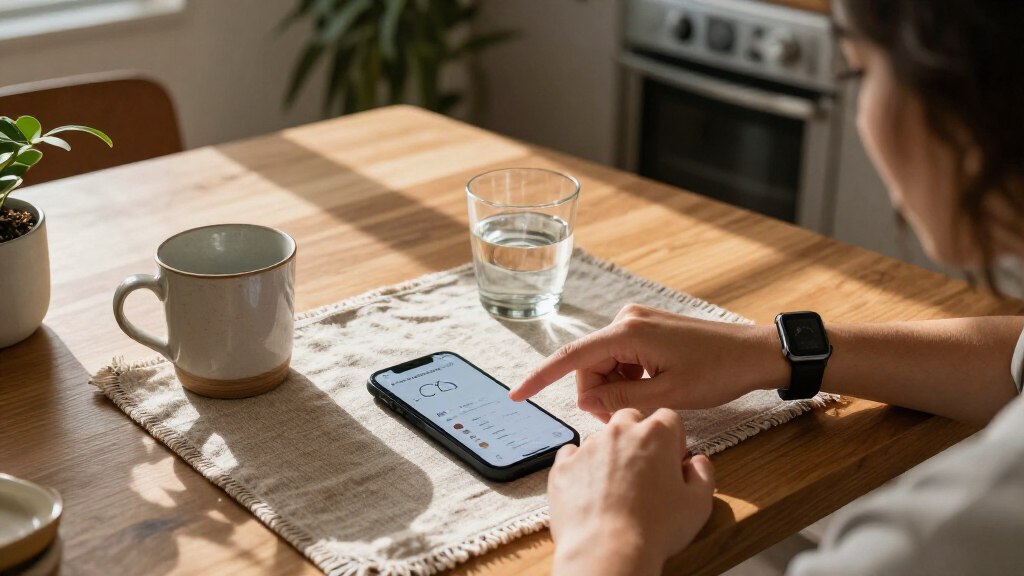

Use this guide to set up a personal wellness tracker, choose a few meaningful measures and build a simple routine for recording and reviewing them. It is for beginners using a paper journal, spreadsheet or phone app, with or without a wearable device. Setup takes about 30-45 minutes; daily entries usually take about 5 minutes.

Get health and wellness essentials delivered free with Prime
- Fast, free delivery on millions of items
- Prime Video, Amazon Music and more included
- Member-only deals all year

And Per Se Wellness Journal – Self-Care Daily Journal for Women with Habit Tracker, Diet & Goals, Undated, 6.5" x 8", Original Be…
- ✔ Format: Undated daily wellness journal
- ✔ Pages: 192 pages
- ✔ Paper size: 6.5 x 8 inches

Filofax Personal Wellness Tracker Refill (Model 132688)
- ✔ Model: 132688
- ✔ Format: Organizer refill
- ✔ Calendar type: Weekly

Self-Care Journal with Wellness Trackers, Mood Log & Reflection
- ✔ Brand: Teravon
- ✔ Format: Daily self-care journal
- ✔ Calendar type: Daily
Difficulty: Beginner | Time: 30-45 minutes to set up, then 5 minutes daily
What You’ll Need
Tools & Materials:
- A notebook, spreadsheet or wellness tracking app
- A pen or phone for daily entries
- Optional: a wearable or home device for measures such as steps, sleep duration or resting heart rate
Knowledge:
- Basic familiarity with writing notes or using a phone app
- A general idea of one wellness habit or area you want to understand
Choose a tracker you can access easily and use consistently. A tracker records information; it does not diagnose illness or replace advice from a qualified health professional. Avoid adding sensitive health details to an app until you have reviewed its privacy settings.
And Per Se Wellness Journal – Self-Care Daily Journal for Women with Habit Tracker, Diet & Goals, Undated, 6.5" x 8", Original Be…
The And Per Se journal is our best overall choice because it connects several everyday signals in one place: sleep, meals, water, exercise and emotions, alongside gratitude, habits and goals. That breadth gives it an edge over the Filofax refill, which is more focused on weekly workouts and habit planning. It also offers more structured daily health prompts than the Teravon journal’s emphasis on feelings, self-care actions and personal notes.Undated pages make it easier to begin when a routine is ready and resume after missed days without leaving dated gaps. Its lay-flat hardcover helps keep writing comfortable on a desk or table, and 100 gsm paper is intended to reduce ink bleed. The 6.5-by-8-inch format is a middle ground: more substantial than the compact Filofax insert, but less spacious than Teravon’s 8.3-by-11.2-inch pages.The tradeoff is a relatively compact writing area for anyone who wants to journal at length, and the journal is specifically designed for women, which may not suit every buyer. It is a standalone book rather than a refill for an existing organizer. Choose it when a guided, broad daily snapshot matters more than large open pages or planner-system compatibility.
Pros:
- Tracks sleep, meals, water, exercise, emotions, habits and goals in one journal.
- Undated pages allow flexible starts and pauses.
- Lay-flat hardcover supports writing on a desk or other flat surface.
- 100 gsm paper is designed to help prevent ink bleed.
Cons:
- The 6.5-by-8-inch pages may feel small for long entries.
- Its women-focused design may not fit every buyer.
- Does not integrate as a refill into a planner system.
Best for: Adults who want guided, undated daily tracking across health habits, mood and gratitude in a standalone journal.
Not ideal for: People who want extensive free-writing space, a refill for an existing planner, or a journal not specifically designed for women.
Bottom line: Choose And Per Se for the broadest guided daily wellness picture; choose Teravon if reflection space matters more, or Filofax if you already use a compatible organizer.
“Choose And Per Se for the broadest guided daily wellness picture; choose Teravon if reflection space matters more, or Filofax if you already use a compatible organizer.”
Filofax Personal Wellness Tracker Refill (Model 132688)
For people who already organize life in a Filofax Personal binder or Clipbook, this refill makes wellness tracking part of the same weekly planning routine. Its weekly workout sheets, wellness goals and habit pages are more focused than And Per Se’s daily health log, which records a wider range of measures. That narrower scope can be an advantage if the main aim is to plan exercise and keep habits visible alongside appointments and tasks.At 3.74 by 6.73 inches, the sheets are easy to carry inside a compatible organizer, and 80 gsm white paper provides a dedicated writing surface. The pack includes 56 sheets, so buyers can add a finite set of wellness pages instead of carrying a full standalone journal. Compared with Teravon’s large spiral-bound layout, Filofax takes up less room and is better suited to brief weekly entries than open-ended reflection.Compatibility is the deciding constraint: the refill is designed for Filofax Personal organizers and Clipbooks and is not compatible with the Filofax refillable notebook. It also cannot serve larger organizer formats. If you do not already own a matching system, And Per Se is the more complete ready-to-use tracker, while Teravon offers a standalone writing surface.
Pros:
- Designed to fit Filofax Personal organizers and Clipbooks.
- Includes weekly workout, wellness goal and habit tracking sheets.
- Compact sheets travel inside a compatible planner.
- 80 gsm white paper provides a dedicated writing surface.
Cons:
- Not compatible with the Filofax refillable notebook.
- Limited to Personal-size organizers.
- Offers less daily health tracking than And Per Se.
Best for: Filofax Personal organizer or Clipbook owners who want weekly workout, goal and habit tracking alongside their existing plans.
Not ideal for: Buyers without a compatible Personal organizer, users of larger formats, or anyone seeking extensive daily health metrics.
Bottom line: This is the most convenient pick for an existing Filofax Personal setup, but And Per Se suits broader daily tracking and Teravon suits longer reflection.
“This is the most convenient pick for an existing Filofax Personal setup, but And Per Se suits broader daily tracking and Teravon suits longer reflection.”
Self-Care Journal with Wellness Trackers, Mood Log & Reflection
Teravon stands out for people who want their wellness tracker to leave room for interpretation, not just checkboxes. Its guided daily check-ins and weekly reflection pages pair mood and habit visuals with space to record self-care actions, small wins and personal notes. That review rhythm makes it more reflection-led than the Filofax refill, whose compact weekly sheets favor planning, and more open-ended than And Per Se’s broad set of daily health prompts.The 8.3-by-11.2-inch pages offer substantially more writing room than either competitor. A spiral binding lets the journal lie flat, which can be useful when writing regularly at home or at work. Buyers who want to explore why a habit helped or how a mood changed may find that space more useful than a compact list of daily metrics.That room comes with a portability tradeoff: this is the largest option in the lineup, and the supplied details specify a physical journal without digital access or syncing. Its listed specs do not state page count or paper weight, so buyers should not assume either. Pick Teravon when regular writing and weekly pattern review are central; for a smaller, more structured daily dashboard, And Per Se is easier to carry, while Filofax is the planner-friendly choice.
Pros:
- Combines daily check-ins with weekly reflection pages.
- Includes mood and habit tracking visuals.
- Large pages leave room for notes and reflection.
- Spiral binding allows the journal to lie flat.
Cons:
- The larger format is less portable than Filofax or And Per Se.
- Product details specify a physical format without digital access or syncing.
- Page count and paper weight are not specified in the supplied details.
Best for: Adults who want a large writing surface for daily mood and self-care notes, supported by weekly reflection prompts.
Not ideal for: People seeking a compact travel journal, digital syncing, or a planner refill with detailed daily health metrics.
Bottom line: Choose Teravon when writing and weekly reflection matter most; And Per Se is more compact and metric-rich, while Filofax fits an existing planner routine.
“Choose Teravon when writing and weekly reflection matter most; And Per Se is more compact and metric-rich, while Filofax fits an existing planner routine.”
As an Amazon Associate we earn from qualifying purchases.
Before You Start
Pick one reason for tracking, such as noticing whether a regular bedtime supports your energy or whether short walks fit your schedule. Start with two to four measures. Tracking too many details can take time and make patterns harder to spot.
Use the same method and roughly the same time of day for measures you compare. Wearable readings can vary by device and fit. Treat them as estimates, and do not change medication or care based on tracker data alone.
Step-by-Step Instructions
Step 1: Choose one question to answer
Write one question that connects a daily habit with how you feel or function. For example: Do I feel more rested when I keep a steady bedtime? Make the question specific enough to guide what you record, but broad enough to explore over several weeks.
Tip:Track something you can influence, such as a routine or activity, alongside a simple outcome such as mood or perceived energy.
Check: Your question names a habit or condition and an outcome you want to understand.
Step 2: Select a few measures
Choose two to four measures that help answer your question. You might record bedtime, approximate sleep duration and a morning energy rating from 1 to 5. For a movement goal, you could record minutes walked and how you felt afterward. Include only details you are comfortable keeping.
Tip:Prefer measures you can record reliably. If a number is not available or useful, a short note can work just as well.
Check: Each selected measure has a clear meaning, such as “minutes walked” or “energy, 1 = very low and 5 = very high.”
Step 3: Choose your tracking format
Use a notebook, a simple spreadsheet or an app. Create one row or entry per day, with a date and a field for each measure. If you use a wearable, decide which readings you will copy or review; avoid collecting every metric just because the device offers it.
Tip:Check that an app lets you export or delete your data if that matters to you. Use a screen lock and avoid entering identifying information you do not need.
Check: You can open the tracker quickly and see where each daily entry belongs.
Step 4: Set a brief daily routine
Choose a consistent time to make entries, such as after breakfast or before bed. Set a reminder if useful. Record the date, the selected measures and a short note about unusual circumstances, such as travel, illness or a late shift, when they may help explain a change.
Tip:Keep the routine under five minutes. If a measure is unavailable, leave it blank rather than guessing.
Check: You have a time and place for recording, and a sample entry takes only a few minutes.
Step 5: Record a baseline before changing your routine
For the first 7 to 14 days, record your chosen measures without trying to force a particular result. Keep your usual routine where practical. This gives you a starting point for comparison and shows which measures are easy enough to maintain.
Tip:Missing a day does not spoil the record. Leave it empty and continue on the next day; do not fill gaps from memory unless you clearly label the entry as an estimate.
Check: You have several dated entries that reflect your ordinary routine, with any estimates or missing days clearly marked.
Step 6: Review patterns at a set interval
Once a week, spend about 10 minutes reviewing the entries. Look for repeated patterns across several days, such as energy ratings tending to be higher after longer sleep. Compare like with like where possible, and read notes about unusual circumstances before drawing conclusions.
Tip:A single high or low reading can happen for many reasons. Focus on recurring patterns, not isolated numbers or daily rankings.
Check: You can describe one pattern you noticed, or state that there is not enough information yet.
Step 7: Make one small, time-limited adjustment
If you see a plausible pattern, choose one manageable change to try for one or two weeks. For example, move bedtime 15 minutes earlier or schedule a short walk after lunch. Keep the same measures and continue recording so you can compare the trial with your baseline.
Tip:Change one routine at a time when possible. Several simultaneous changes make it difficult to tell which one relates to a difference.
Check: Your adjustment is specific, realistic and has a planned review date.
Step 8: Decide whether to continue, revise or stop
At the review date, compare the trial period with your baseline and consider how the routine felt in practice. Continue if it is helpful and sustainable, revise it if it was difficult to follow, or stop if it did not suit you. Update your tracking question or measures only when there is a clear reason.
Tip:Contact a qualified health professional about concerning or persistent symptoms. Do not use a tracker score as a diagnosis.
Check: You have recorded a decision and a next review date, or chosen to end the tracking experiment.
Common Mistakes to Avoid
- Tracking too many measures from the start. — Begin with two to four measures tied to one question. Add another only if it helps answer that question and remains easy to record.
- Changing several habits while collecting a baseline. — Record your usual routine for 7 to 14 days first, then try one small change at a time.
- Treating estimated device readings as exact. — Use device data as an estimate, note which device produced it and compare readings from the same device under similar conditions.
- Skipping entries and later filling them in from memory. — Leave missed entries blank or label them as estimates. Resume with the next entry without trying to create a perfect record.
Troubleshooting
Problem: You keep forgetting to record entries.
Solution: Attach the entry to an existing routine, such as brushing your teeth, and set one reminder. Remove fields that make recording take too long.
Problem: Your wearable or app has missing readings.
Solution: Check device fit, battery, permissions and phone syncing instructions. Mark the date as missing if the reading cannot be recovered; do not substitute a guess.
Problem: The numbers change from day to day and no pattern is clear.
Solution: Continue for another week or two, use consistent recording conditions and review weekly averages or recurring notes instead of focusing on single days.
Problem: Tracking makes you anxious or overly focused on scores.
Solution: Pause or remove the triggering measure, reduce how often you check the data, and discuss persistent distress or health concerns with a qualified professional.
What Success Looks Like
Your tracker has a clear question, a small set of defined measures, dated entries and a repeatable recording routine. After at least one review interval, you can identify a possible pattern or recognize that more data is needed. You have made a measured decision about a small adjustment without treating tracker readings as a diagnosis.
Next Steps
Keep the weekly review on your calendar while the question remains useful. After a few weeks, remove measures that do not inform a decision, and keep only the routine you can sustain. If the tracker no longer helps, stop and retain or delete the record according to your preferences and the app’s data controls. Bring relevant records to a health professional when they may help explain a concern, while describing device readings as estimates.
Frequently Asked Questions
How long should I track before looking for a pattern?
Collect at least 7 to 14 days of baseline entries, then review weekly. Some habits or outcomes vary by season, work schedule or health, so a longer period may be needed. Avoid drawing a firm conclusion from a few entries.
Do I need a smartwatch or paid app?
No. A notebook or spreadsheet can track habits, symptoms you choose to note, and simple ratings. A wearable can reduce manual work for some measures, but its readings are estimates and are not required for a useful routine.
What should I do if I miss a day?
Leave the entry blank and continue the next day. If you remember a detail later and want to add it, label it as an estimate so it is distinct from a same-day record.
Can a wellness tracker tell me whether I have a medical condition?
No. A tracker can help you notice and communicate patterns, but it cannot diagnose a condition. Ask a qualified health professional about persistent, severe or worrying symptoms.