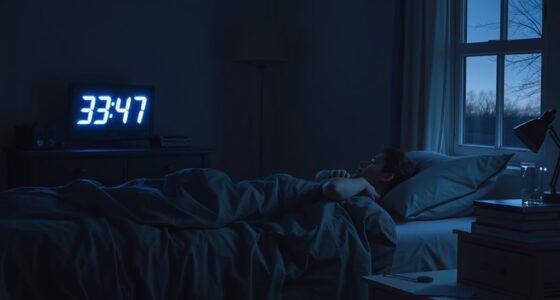
Regular exercise can considerably improve your sleep by helping you fall asleep faster, stay asleep longer, and reach deeper sleep stages. It boosts sleep-promoting chemicals like serotonin and melatonin while reducing stress hormones, making rest more restorative. The timing matters; morning or early afternoon workouts tend to support better sleep, while exercising too close to bedtime might delay it. If you’re curious about optimizing your routine, there’s more to discover about how to tailor your workouts for the best sleep.
Open a free Amazon Business account
Business pricing, bulk buying and tax-exempt orders.
As an affiliate, we earn on qualifying purchases.
Key Takeaways
- Regular exercise enhances sleep quality by promoting faster sleep onset and deeper, more restorative sleep phases.
- Exercise increases production of sleep-promoting chemicals like serotonin and melatonin, aiding sleep regulation.
- Physical activity reduces stress hormones, which helps improve overall sleep efficiency and duration.
- Exercising earlier in the day supports better sleep by aligning with the body’s circadian rhythm.
- Evening workouts may delay sleep onset, but moderate activities like yoga can sometimes promote relaxation and better sleep.

Regular exercise can substantially improve your sleep quality, helping you fall asleep faster and enjoy more restorative rest. When you stay active, your body responds positively by reducing stress hormones and increasing the production of sleep-promoting chemicals like serotonin and melatonin. This natural boost makes it easier for you to drift off and stay asleep throughout the night. However, one important factor to think about is workout timing. The time of day you choose to exercise can influence how well you sleep. Exercising too close to bedtime might interfere with your ability to fall asleep because your body remains energized, raising your heart rate and core temperature. Conversely, working out earlier in the day or at least several hours before bedtime allows your body sufficient time to wind down, aligning better with your natural circadian rhythm.
If you’re aiming to maximize sleep quality, morning or early afternoon workouts tend to be more effective. Exercise early in the day helps regulate your internal clock, making you feel more alert during waking hours and promoting deeper sleep at night. On the other hand, late-evening workouts can sometimes delay sleep onset, especially if they’re vigorous or if your body doesn’t have enough time to cool down afterward. It’s a good idea to observe how your body responds to workout timing and adjust accordingly. Some people find that moderate evening exercise, like yoga or stretching, doesn’t disrupt their sleep and might even relax them before bed. Additionally, sleep hygiene practices such as maintaining a consistent sleep schedule and creating a relaxing bedtime routine can further enhance the benefits of exercise on sleep quality.
sleep improving exercise equipment
As an affiliate, we earn on qualifying purchases.
As an affiliate, we earn on qualifying purchases.
Frequently Asked Questions
Can Exercise Help With Insomnia?
Yes, exercise can help with insomnia. You should aim for about 30 minutes of moderate exercise daily, as this duration promotes better sleep without overstimulation. Keep exercise intensity moderate; high-intensity workouts close to bedtime might interfere with sleep. Regular physical activity helps regulate your circadian rhythm and reduces stress, making it easier for you to fall asleep and stay asleep through the night.
Is It Better to Exercise Morning or Evening?
Morning workouts often boost your energy and help set a positive tone for the day, making it easier to stick to your routine. Evening training can relax your mind and tire your body, promoting better sleep, but it might interfere with your sleep if done too late. Ultimately, choose the time that fits your schedule and feels best for your body, whether it’s morning workouts or evening training.
Does Intense Exercise Disrupt Sleep Quality?
Intense exercise can disrupt sleep quality if done too close to bedtime, as high exercise intensity raises your adrenaline and body temperature, making it harder to fall asleep. To avoid sleep disruption, schedule your intense workouts earlier in the day. If you must exercise intensely later, give yourself at least a few hours to wind down. This way, you allow your body to recover and promote better sleep.
How Long Before Bed Should I Exercise?
Think of your sleep as a delicate dance; timing considerations matter. For most, exercising at least three hours before bed helps prevent disruption. Shorter workouts, around 30 minutes, are usually fine closer to bedtime, but longer or intense sessions may energize you too much. Experiment with your workout duration and timing to find what best supports your sleep quality, ensuring you wind down peacefully afterward.
Can Exercise Reduce Sleep Apnea Symptoms?
Exercise can reduce sleep apnea symptoms by improving your overall muscle tone and promoting better sleep posture. Regular, moderate exercise, typically lasting about 30 minutes daily, helps lessen airway obstructions during sleep. Focus on exercises that strengthen your neck and upper airway muscles, and avoid overexertion. Maintaining good sleep posture and consistent exercise duration can markedly improve breathing during sleep, alleviating sleep apnea symptoms over time.
As an affiliate, we earn on qualifying purchases.
Conclusion
Now that you know how exercise acts like a gentle lullaby for your body, you can harness its power to drift into restful sleep each night. Think of it as planting seeds of calm and energy, blooming into peaceful dreams. By making movement a daily ritual, you’re crafting a pathway through the night’s darkness, guiding your mind and body to a serene, restorative sleep. Embrace the rhythm, and let your nights become a canvas of tranquility.
As an affiliate, we earn on qualifying purchases.
As an affiliate, we earn on qualifying purchases.
NFL season / tailgating Picks
team gear
As an affiliate, we earn on qualifying purchases.