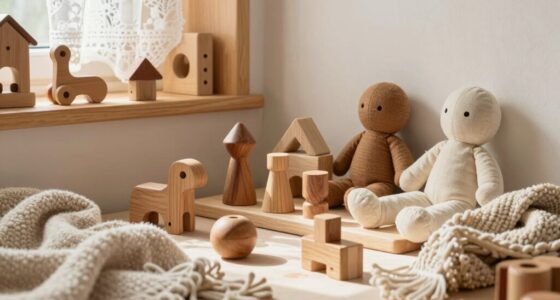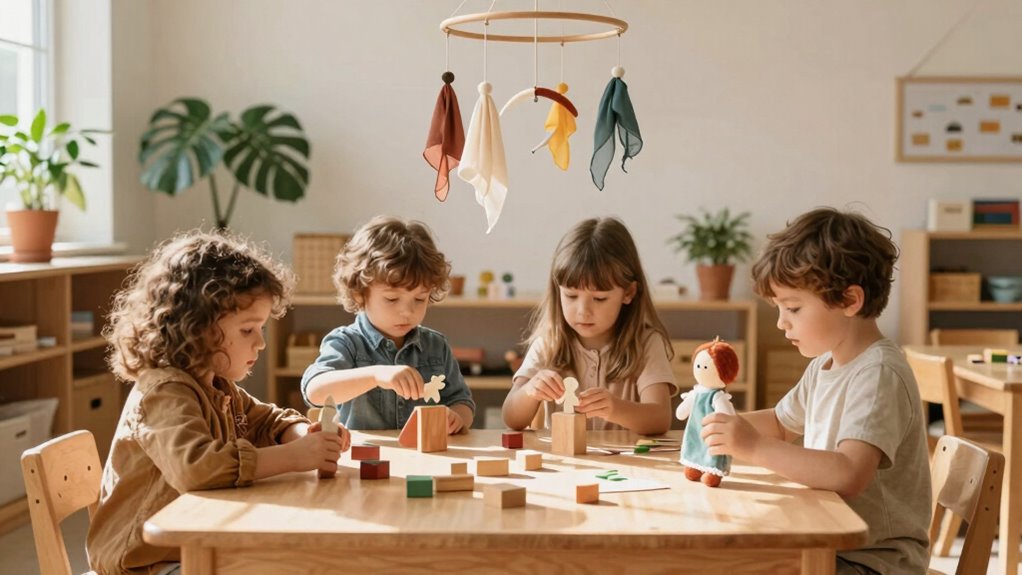

Imagination is central to Waldorf early childhood, guiding how children explore, create, and understand their world. You’ll see it in stories they invent, pretend play, and artistic activities like drawing or movement. These experiences foster curiosity, develop social skills, and nurture confidence while respecting their developmental stages. Focusing on imagination rather than digital stimuli helps children build emotional balance and lifelong thinking skills. Keep exploring to uncover how these practices truly shape childhood growth.
Prime for Young Adults — start your free trial
Fast free delivery, streaming and member deals for eligible 18–24 year olds.
As an affiliate, we earn on qualifying purchases.
Key Takeaways
- Imagination fosters children’s inner worlds through storytelling, pretend play, and engagement with materials, supporting emotional and cognitive development.
- Artistic activities like painting and modeling enable children to express ideas and emotions, enhancing confidence and fine motor skills.
- Creative storytelling and role play strengthen imaginative capacities, social skills, empathy, and problem-solving abilities.
- Respect for developmental stages ensures activities align with children’s growth, promoting emotional balance and lifelong learning.
- Emphasis on sensory and tactile experiences enhances perceptual skills and authentic imaginative engagement, reducing reliance on digital stimulation.

Imagination plays a central role in Waldorf early childhood education, shaping how children explore and understand the world around them. You’ll notice that children are encouraged to create stories, pretend play, and engage with materials in ways that spark their inner worlds. Creative storytelling becomes an essential tool, allowing children to weave their thoughts and feelings into narratives that reflect their experiences and fantasies. When you see a child inventing a tale about a brave knight or a curious animal, you’re witnessing how their imagination helps them process their environment and develop their sense of self.
In Waldorf classrooms, artistic expression is woven into daily activities, providing children with endless opportunities to translate their ideas into tangible forms. Whether they’re painting, drawing, modeling with clay, or engaging in movement and dance, children learn to express their inner visions freely. You’ll find that these artistic pursuits aren’t just about creating pretty pictures—they serve as a means for children to communicate emotions, explore new concepts, and build confidence. As they experiment with colors, shapes, and textures, they develop their fine motor skills and deepen their understanding of the world, all through their own imaginative lens.
By integrating creative storytelling and artistic expression into the curriculum, Waldorf education nurtures a child’s natural curiosity and inventiveness. You’ll see that children often take their stories beyond words, embodying characters through role play or improvisation, which strengthens their imaginative capacities and social skills. This process helps them learn empathy, patience, and cooperation as they navigate their creative worlds with peers. The emphasis on imagination also fosters resilience; children learn to invent solutions within their stories and art projects, encouraging flexible thinking and problem-solving skills.
Furthermore, the focus on imaginative activities respects the developmental stages of young children. Instead of rushing toward academic achievement, Waldorf education allows children to deepen their inner worlds through creative storytelling and artistic expression. You’ll find that the more children are encouraged to imagine and create, the more confident and emotionally balanced they become. Their capacity to dream, invent, and express themselves becomes a foundation for lifelong learning and personal growth, making imagination not just a playful activity but a crucial life skill. Recognizing that emerging trends in digital publishing can influence educational approaches, Waldorf educators often emphasize the importance of nurturing authentic imaginative experiences over digital stimulation. Additionally, incorporating a variety of sensory experiences, including tactile and visual elements, enhances the development of color accuracy and contrast, which can be beneficial for children’s artistic endeavors and perceptual skills.
Waldorf artistic activity supplies for children
As an affiliate, we earn on qualifying purchases.
As an affiliate, we earn on qualifying purchases.
Frequently Asked Questions
How Does Imagination Influence Child Development Outside Waldorf Education?
Imagination and creativity profoundly influence your child’s development outside Waldorf education by fostering emotional growth and problem-solving skills. When your child engages in imaginative play, they learn to express feelings, understand others, and develop empathy. This process boosts emotional resilience and encourages innovative thinking. By nurturing their imagination, you help your child build a strong foundation for social interactions, adaptability, and overall emotional well-being, essential for thriving in various life situations.
Are There Specific Activities That Best Foster Imagination in Young Children?
Think of your child’s imagination as a garden needing gentle watering. Engaging in fantasy storytelling sparks their creativity, allowing them to explore new worlds. Creative arts like drawing, painting, and crafting serve as fertile ground where their ideas bloom. These activities nurture imagination by encouraging open-ended play and self-expression, transforming everyday moments into magical adventures. By fostering these activities, you help your child develop a vibrant, limitless inner world.
How Do Parents Support Imaginative Play at Home?
You can support imaginative play at home by actively engaging with your child’s ideas and encouraging their creativity. Parent involvement is key—join in their pretend scenarios, ask open-ended questions, and nurture their stories. Incorporate creative storytelling by inventing characters and worlds together, which sparks their imagination. Providing simple props or natural materials also helps, giving your child tools to build their own magical, playful worlds.
What Are Common Challenges in Nurturing Imagination in Early Childhood?
You might face challenges like distractions, limited time, or lack of resources that hinder nurturing imagination. To overcome these, prioritize creative storytelling and sensory exploration, encouraging your child to invent stories and explore textures, sounds, and sights. Be patient and flexible, creating a rich environment that fosters curiosity. By doing so, you help your child develop a vibrant imagination that supports their overall growth and love for learning.
How Is Imagination Integrated Into Waldorf Curriculum Beyond Play?
Imagine your child’s imagination as a garden that blooms beyond play. You nurture it through creative storytelling and artistic expression, weaving stories into lessons and encouraging art projects that spark wonder. In Waldorf curriculum, imagination grows as a vibrant vine connecting subjects, making learning a tapestry of stories and colors. This approach invites children to see the world through a lens of creativity, deepening their understanding and love for learning.
As an affiliate, we earn on qualifying purchases.
Conclusion
As you embrace the magic of imagination in Waldorf early childhood, you’re opening a universe more vibrant than the most dazzling fireworks or the grandest fairy tales. Every story, every play moment, becomes a portal to worlds beyond your wildest dreams. Your child’s imagination isn’t just a fleeting sparkle—it’s a superpower capable of transforming everyday moments into extraordinary adventures. So, nurture that imagination fiercely; it’s the key to a lifetime of wonder and endless possibilities!
children's storytelling and role play kits
As an affiliate, we earn on qualifying purchases.
As an affiliate, we earn on qualifying purchases.
sensory and tactile learning toys for preschoolers
As an affiliate, we earn on qualifying purchases.
As an affiliate, we earn on qualifying purchases.
NFL season / tailgating Picks
team gear
As an affiliate, we earn on qualifying purchases.