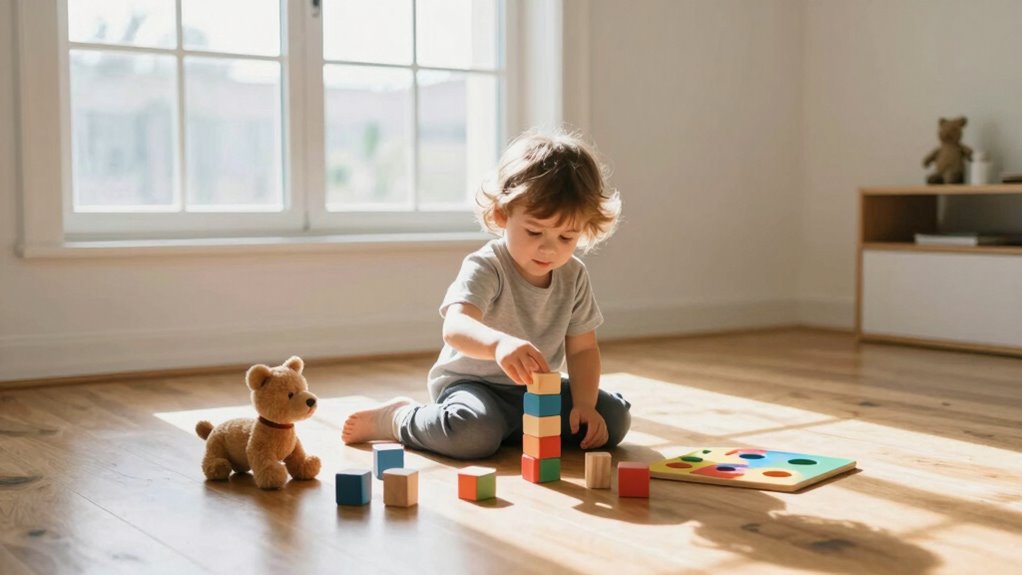

To encourage more constructive play with fewer toys, focus on using household items and prompting your child to lead their activities. Ask guiding questions like “What can you create with these?” and avoid ready-made solutions. Incorporate everyday objects like boxes or utensils to spark imagination, and support their problem-solving and storytelling. By fostering independence and resourcefulness, you’ll help your child develop critical thinking and confidence. Keep exploring for more ideas to make play both fun and enriching.

Get health and wellness essentials delivered free — and shop member deals
- Fast, free delivery on millions of items
- Access to Prime Big Deal Days deals on October 6–7
- Prime Video, Amazon Music and more included
Key Takeaways
- Use household items creatively to expand play possibilities and reduce reliance on toys.
- Incorporate open-ended prompts and questions to inspire imagination and problem-solving.
- Focus on storytelling and role-play activities to foster language development and self-expression.
- Encourage child-led play by allowing children to choose materials and direct their activities.
- Prioritize quality of play over quantity of toys, emphasizing creativity, resilience, and critical thinking.
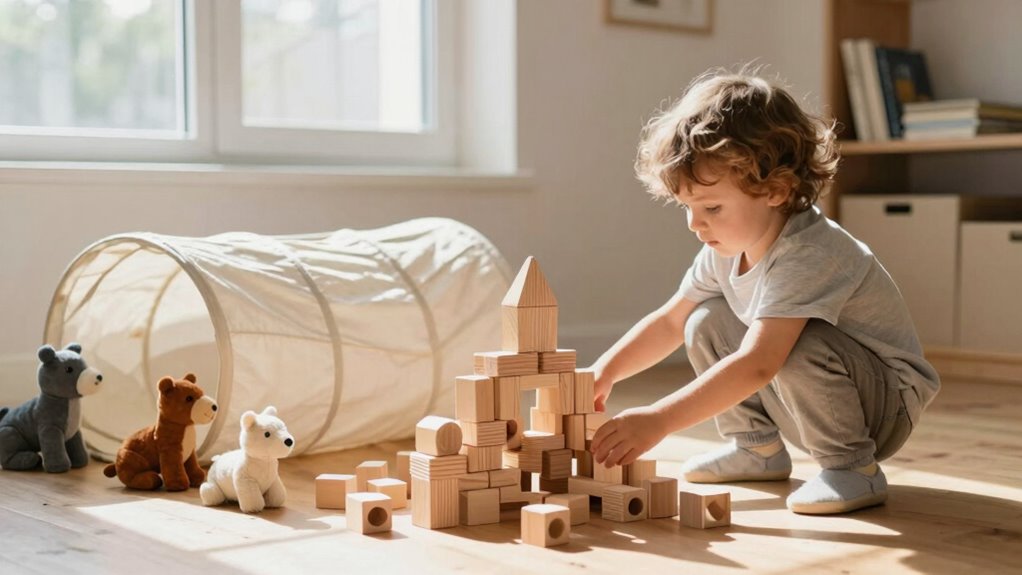
Are you looking for ways to foster more meaningful and constructive play in children? If so, shifting your focus from an abundance of toys to encouraging creativity and problem-solving skills can make a significant difference. One effective approach is to engage children in creative storytelling, where they become the authors of their own adventures. You can start by providing simple prompts or pictures and ask them to invent stories around these themes. This activity sparks their imagination, helps develop language skills, and encourages them to think critically about plot development and character choices. As they craft their stories, they learn to express themselves clearly and confidently, all while having fun with minimal materials.
Encourage storytelling to boost creativity, language, critical thinking, and confidence with minimal materials.
In addition to storytelling, problem-solving activities are essential in promoting constructive play. You can set up scenarios that challenge children to think critically and find solutions, such as puzzles, building tasks, or even real-world simulations. For instance, give them a set of materials like cardboard, tape, and string, and challenge them to build a bridge or a tower. These activities teach patience, perseverance, and innovative thinking. When children are faced with a problem, they learn to analyze the situation, weigh options, and test their ideas, which nurtures resilience and resourcefulness.
You don’t need a lot of toys to support this kind of play. Instead, you can repurpose everyday household items for open-ended activities. For example, old boxes can become castles, tunnels, or spaceships in their stories. Scattered household objects can serve as puzzle pieces or building blocks, encouraging children to see familiar items in new ways. This not only minimizes clutter but also broadens their creative horizons, pushing them to think outside the box.
Encouraging children to lead their play is essential. Resist the urge to step in with ready-made solutions or toys, and instead ask guiding questions that prompt deeper thinking. For example, “What could you use to fix that?” or “What do you think happens next in your story?” These prompts stimulate their problem-solving abilities and creative storytelling skills simultaneously. Over time, this approach nurtures independence, confidence, and a love for learning.
children's open-ended play household items
As an affiliate, we earn on qualifying purchases.
As an affiliate, we earn on qualifying purchases.
Frequently Asked Questions
How Do I Prevent My Child From Becoming Bored With Fewer Toys?
You can prevent boredom by practicing toy rotation, regularly swapping out toys to keep things fresh and exciting. Introduce creative prompts, like challenging your child to build something new or imagine different scenarios with the toys available. This approach sparks their imagination and keeps playtime engaging. By limiting toys and mixing up their options, you encourage your child to explore, invent, and enjoy more meaningful, constructive play every day.
What Are the Signs of Constructive Play Development?
Think of your child’s play as a garden blossoming. Signs of constructive play development include increased problem-solving, creativity, and skill development. You’ll notice them experimenting, organizing, and creating stories with toys. Using toy rotation keeps their interest alive, encouraging deeper engagement. As they progress, their play becomes more purposeful, reflecting cognitive growth and fine motor skills. This steady development signals they’re mastering the art of constructive play.
How Can I Introduce New Play Ideas Without More Toys?
You can introduce new play ideas by engaging your child in creative storytelling and sensory exploration. Encourage them to invent stories using everyday objects or natural materials, sparking imagination without extra toys. Set up sensory stations with items like rice, fabric, or water, inviting hands-on exploration. This approach fosters constructive play, enhances creativity, and uses existing items effectively, making playtime enriching and resourceful.
What Age Is Best for Encouraging Constructive Play?
You can start encouraging constructive play from infancy through early childhood, around age one to five. Imagine a child’s curiosity blossoming as they explore a rotated toy collection, sparks of creativity igniting with simple prompts like “what can you build?” Toy rotation introduces variety, while creative prompts inspire imagination and problem-solving. During these formative years, your guidance helps develop their cognitive skills, laying a strong foundation for future learning.
How Do I Balance Guidance and Free Play Effectively?
You can balance guidance and free play by setting boundaries that promote safe and focused exploration while still fostering independence. Offer gentle prompts or suggestions when needed, but let your child lead their play. Encourage decision-making and problem-solving, stepping in only to support or guide rather than control. This approach helps children develop confidence, creativity, and self-regulation, creating a healthy mix of structured guidance and open-ended discovery.
As an affiliate, we earn on qualifying purchases.
Conclusion
By focusing on quality over quantity and guiding your child toward meaningful activities, you create a garden where creativity and problem-solving can bloom. Remember, fewer toys can be the seeds of endless imagination when nurtured with your involvement. Like a skilled gardener tending delicate blooms, your encouragement helps foster constructive play that grows strong and resilient. Embrace simplicity, and watch your child’s world blossom into a vibrant landscape of discovery and joy.
DIY building blocks for children
As an affiliate, we earn on qualifying purchases.
As an affiliate, we earn on qualifying purchases.
creative problem-solving toys for kids
As an affiliate, we earn on qualifying purchases.
As an affiliate, we earn on qualifying purchases.
Fall Picks
fall essentials
As an affiliate, we earn on qualifying purchases.